Cleaning Station
Like the majority of sites here, you will find Cleaning Station a nice and easy dive. The entry point is about 100m away from the dive station and you initially descend to the top of the reef at about 5m depth before gently making your way down the slope. You can then cruise along in the typically mild current at about 16m checking out various colorful nudibranchs, as well as the resident turtles hanging around an old wooden boat wreck.
You may also encounter one or more cuttlefish hovering in the water. You can watch as pulses of colour play over its back and it watches you, seemingly with as much interest as you are watching it. Inspect the sand too for the large holes inhabited by jawfish. These are a more common sight around Kapalai than they are in many other places.
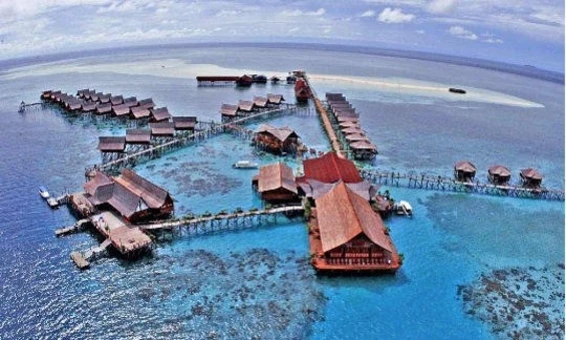
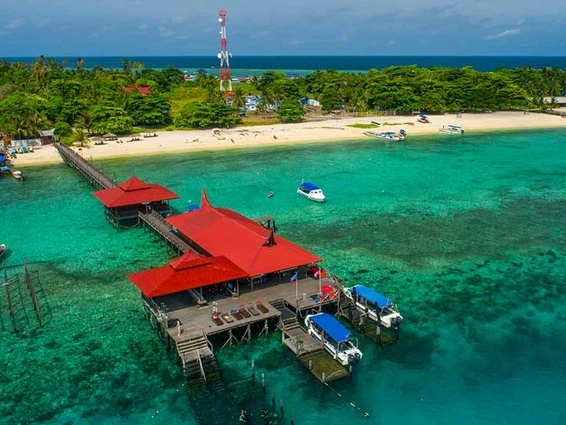
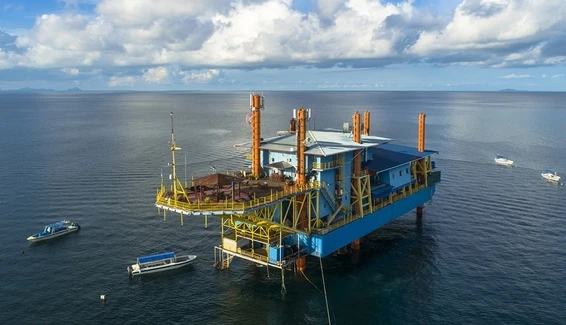
The dive sites of Kapalai generally run from one into the next, so you might find yourself starting at one site and ending on another. Someone here at the resort definitely has a sense of humour - several of these sites have mock electricity pylons, small huts and rock piles to decorate the site and attract the marine life.
The Cleaning Station offers a small and interesting surprise at every turn. This gentle drift drive is ideal for beginners and yet still extremely satisfying for the experienced scuba diver. Cruise along the reef and see which unusual creatures you can tick off your wish list.
Crocodile Lair
A fitting name, though you are more likely to spot the well-camouflaged crocodilefish than any estuarine reptile. This Kapalai dive site sits on a gentle sandy slope scattered with small coral bommies and rubble patches, perfect hunting grounds for ambush predators. Descend to around 14 metres and move slowly. That odd-shaped rock with the whiskered jaw? A crocodilefish, frozen mid-stalk. Look closer at the sandy patches and you will find leaf scorpionfish rocking gently with the surge, their tasselled fins almost indistinguishable from debris. Moray eels peer from crevices, and blue-spotted stingrays glide just ahead of your fins.
The shallows hold the real prize: several pairs of robust ghost pipefish, often in pale pink or yellow, clinging to crinoids. Night dives here reveal a different world: hermit crabs marching, sleeping parrotfish, and if you are lucky, the slow, deliberate hunt of a Spanish dancer nudibranch. Diving in Kapalai rewards the patient observer, and Crocodile Lair exemplifies that perfectly.
Eel Garden
Do not confuse this with the famous muck sites of the same name elsewhere. Kapalai’s Eel Garden is a vast, gently sloping sand flat that begins in just 5 metres and drops to 20. The moment you hover neutrally buoyant, you will see them: hundreds of garden eels swaying from their burrows like seagrass in a breeze. Approach with care since these nervous creatures vanish in a coordinated flash, leaving a field of empty holes. Wait motionless for a minute and they slowly re-emerge, bobbling their heads to assess the threat.
Other than the eels, the sand holds surprises: peacock mantis shrimps tend their burrows, their bulbous eyes tracking your every move. Octopus trails lead to tucked-away dens, and juvenile painted frogfish, no bigger than your thumbnail, mimic small sponges. The reef edge nearby hosts ornate ghost pipefish and schools of barracuda. This is a site for patient divers who enjoy the slow, meditative search. Bring a magnifying glass or a macro lens; you will use both. Kapalai diving at Eel Garden is a masterclass in finding the extraordinary hiding in plain sight.
Gurnard Point
This is another site which is abundant in sea life. Having back-rolled off the boat, you can choose to explore either the lively reef wall or the sandy rubble bottom or ... both.
The sand is home to hundreds of mantis shrimps, watchful garden eels and pipefish and there are also plenty of opportunities to watch the symbiosis between partner shrimp and gobies. With such a plethora of activity going on you could easily spend a whole dive covering just a small patch of sand.
On the reef itself divers can find rare and colourful nudibranchs, and several of the resident fish that call Kapalai home. These can include several varieties of boxfish, moray eels and batfish to name but a few. There are also quite a few of the eponymous flying gurnards around. They seem to walk around on the sea floor sometimes spreading their 'wings', especially when approached.
Normally a dive here will take in both the reef and the sand where there is also a small wreck with a giant frog fish at home along with few moray eels. Next to it you might see some sting rays on the sandy plateau.
If you take your time and rest on the sandy floor here you can see the garden eels slowly edging higher and higher in the water, rise a little or approach them and they will start to retreat into their sandy burrows. This can be agony for a photographer but good entertainment for the fun diver, who will be more than happy with their experience at Gurnard Point.
Lobster Rock
Diving at Lobster Rock normally means an easy cruise along the reef enjoying the colourful landscape of soft and hard corals. There is a lot to see among the hard corals, such as nudibranchs and small pipefish but you have to look hard as they are well camouflaged. As the name suggests, lobsters are fairly frequent, especially at night.
You can also spot jawfish on the sandy patches. Needless to say, turtles abound all around these reefs so you may see 3 or 4 on each dive, especially in the shallows. There seems to be almost nowhere on earth where turtles are so common as this part of Malaysia.
As is the norm with diving in Kapalai, you will descend and almost immediately start seeing things of interest. This usually means it takes a while to get down to the maximum depth of the dive. From the shallows you will swim along the reef looking for those rare fish that are well camouflaged in the coral beds, sea fans and on the sandy bottom. Your guide may take a few minutes to stop at some sea fans looking for pipefish which can be very tricky to spot.
Moving along deeper and closer to the sandy bottom, there may be a few juvenile banded pipefish in the area. You need to move slowly here since if you get too close, too quickly they can dart away from sight. Similarly, if you spot any jawfish resting at the top of its burrow on the sandy flat, try not to approach too quickly of they will disappear from view only to emerge again when the threat of the big, bubble-blowing creatures has passed.
Mandarin Valley
Slowly descending down a coral slope on your left shoulder. Don't go too fast or you will miss the more camouflaged residents such as stonefish and frogfish watching you go by. Like all of the dive sites here, both small rare fish and invertebrates are in abundance, living without the threat of Sipadan's many dangerous reef predators. The Ligitan Reefs of Kapalai also act as a nursery for juveniles of many species.
As you get down to the floor you may find several cuttlefish. To watch the responses of the cuttlefish to your movements, as its skin pulsates and flashes into different camouflage patterns, is a great interaction between man and aquatic creature. It is also worth keeping an eye out so as not to miss the chance to see squadrons of their squid cousins jetting by.
The cuttlefish often tend to linger near the wreck of a small fishing boat found in around 18 metres of water. Naturally the wreck provides shelter to various other wonders such as ghost pipefish in various colours including reddish-orange. Also often spotted here are the photogenic longnose hawkfish, crocodilefish and nudibranchs.
Over the channel amidst the corals and sponges, you can hunt at dusk for vibrantly coloured mandarinfish merrily dancing this way and that, among the black spines of sea urchins. The list of small critters to be found here is endless. Add to this the few large sharks and crayfish that put in an appearance after the sun has set and you can see why this site is so highly regarded.
Due to its relatively shallow profile and the prolific list of critters that live here, Mandarin Valley is a very popular site for photgraphers, since they can stay under for long periods of time.
Spotted Ray Channel
As with all the dives at Kapalai, this is a nice relaxing wander in relatively shallow water. Sink down here in the bath-warm water and cruise along a sandy channel leaving the reef to your side. If you have a keen eye you can find all manner of Kapalai's sea-life, including ribbon eels, stonefish, ghost pipefish and a beautiful lavender coloured frogfish.
There is little need for you to exhaust yourself finning to cover ground as it seems that in every crevice there is another small joy waiting to be discovered. Crossing over the sandy channel which gives the site its name the dive normally proceeds to an underwater garden of extraordinary richness.
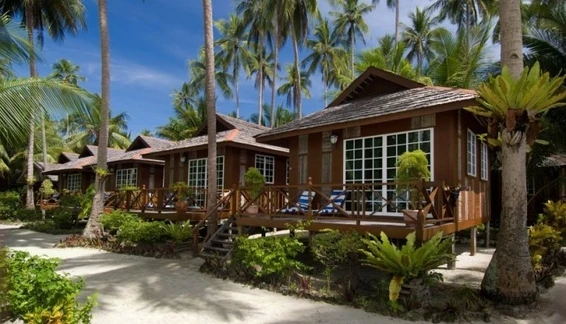
Here you can catch sight of many beautiful and rare nudibranchs among other wonders including, if you are lucky, a tropical octopus. The most highly prized sight in this dive however is the dragonfish or pegasus, found in pairs on the sandy floor. If your group finds them just wait for the excited post-dive chatter on the wooden sundeck of the resort.
Stingray City
A misnomer, but an appealing one. Stingray City is not a single location but a sprawling sandy plateau between Kapalai and Mabul, dotted with small artificial reef structures: old tyres, concrete blocks, and even a deliberately sunk fibreglass speedboat. These attract a remarkable density of rays. Blue-spotted stingrays are common, their electric-blue ocelli bright against the sand. Less common but regularly sighted are the enormous smooth stingrays, which can exceed a metre across. You will often find them half-buried, only their eyes and spiracles visible.
The real highlight comes at dusk, when eagle rays glide overhead in loose formations. Beyond rays, the structures harbour scorpionfish, squat lobsters, and the occasional mimic octopus - a rare treat in these waters. Night dives are especially productive: the boat wreck becomes a hunting ground for lionfish, and the sandy flats reveal bioluminescent specks when stirred. Keep your torch beam wide and watch the edges of your light - that is where the shy ones hide. Diving at Kapalai would not be complete without an afternoon or evening spent drifting over Stingray City’s gentle plateau.