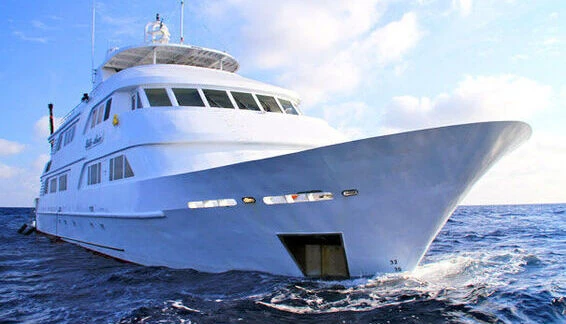
Notes: Mexico is a popular destination with limited liveaboard spaces. We recommend you book well in advance to avoid disappointment.
Dive experience: All certified divers may dive on these cruises. However Nautilus Liveaboards recommends...
Socorro cruises - Advanced Open Water certification (or equivalent) and 50 logged dives.
Sea of Cortez - All certified divers may dive on these cruises.
Cruise price per person includes: Cabin accommodation, breakfast, lunch, dinner, snacks, drinking water, soft drinks, hot drinks, dives (as detailed in the safaris above), experienced English-speaking divemasters (1 guide for 6 scuba divers), standard tanks, weights and weight belts, CD of photos/video at the end of the tour, complimentary photography workshop, Nautilus Lifeline marine rescue GPS, Dive Alert, SMB safety sausage, torch, tank beacon, sales tax.
Cruise price per person excludes (mandatory, unless customer provides own): Scuba equipment (USD 255 per week), dive computer (USD 50 per week), dive insurance, park fees (Socorro: USD 192 per diving day) payable in advance by guests directly to the liveaboard, port fee per cruise (USD 35). Note: park fees are waived for retirees and pensioners over the age of 60 years old. A 75% discount on park fees is available for active students and teachers. Unless otherwise stated, all the listed items need to be paid on arrival (cash or credit card).
Optional extras: Alcoholic drinks, steel and specialized tanks, nitrox fills for enriched air divers (USD 20 per day), rebreather support (including zorb), gas mixes. Unless otherwise stated, all the listed items need to be paid on arrival. Note: prices of items purchased onboard are subject to change.
How to get there: Socorro: The MV Nautilus Belle Amie liveaboard departs in the evening from Cabo San Lucas for safaris to the Socorro islands. Guests fly into Los Cabos international airport (SJD) approximately 45 minutes drive from Cabo San Lucas and board the evening before the boat departs. You must meet at the SeeCreatures Dive Center no later than 7 pm on the evening of boarding. It is located at Calle Miguel Hidalgo 10, Centro, Cabo San Lucas. Ideally you should drop by the dive center as soon as you get to town to make sure you are fully prepared for the trip (including a complimentary photography workshop at 1 pm). Boarding is around 8 pm. You should dine in Cabo before boarding since only light snacks are served on the first evening. The final dive of the trip will be at around 5 pm on the second last day of the tour. The boat will return to harbor during the final morning of the trip and disembark at 8:30 am.
Sea of Cortez: Some trips begin in Cabo San Lucas, in which case the boarding instructions are the same as for Socorro, above. Other trips start in La Paz. For La Paz boardings, you are welcome to drop off your luggage and complete the check-in process at the SeeCreatures Dive Center in Cabo San Lucas whenever it suits you, but please ensure you arrive by 4:30 pm at the latest to join the complimentary coach transfer to La Paz for boarding. The final dive of the trip takes place around 9 am on the penultimate day. We recommend a surface interval of at least 18 hours before any flight. Disembarkation is at approximately 8 am in La Paz on the last morning, followed by the return coach transfer to Cabo San Lucas. For flights departing from SJD on that day, we suggest booking no earlier than 2 pm.
For more details, including airlines, see our Mexico tourist information section.
Non-diver rate: None.
Single supplement (if you do not want to share accommodation): This is optional - single travelers may choose to share a cabin or pay a supplement of 25% for their own Double stateroom.
Dive clubs and group discounts: Pay for 11 guests and 1 extra person can join the cruise in a 3-share stateroom free of charge (total 12 guests).
One of the lower deck staterooms can be used as a triple-share cabin - please request price details.
Whole boat charter rate (per night): No rates are published. Please contact us if you wish to charter Nautilus Belle Amie liveaboard.
Magdalena Bay
Trip highlights: shark action, dolphins, whales, schooling fish & big pelagics, non diving activities
Diving environment: advanced divers, off the beaten track
Dive sites and activities: Snorkelling, free-diving and scuba diving in Magdalena Bay, SS Independence and USS Seawolf
Day 1
In the early evening you will board the Nautilus Belle Amie liveaboard at the marina in Cabo San Lucas, where the crew provides a detailed introduction to the vessel, including safety procedures and an overview of the diving and snorkelling plans for the week ahead. Dinner is served on board as guests settle into their cabins. Shortly after departure, the vessel begins the overnight passage along the Pacific coast of Baja California toward Magdalena Bay. The crossing takes approximately 15 hours and offers time to relax and prepare for the days of marine encounters ahead.
Core Days
From October through November, the waters off Magdalena Bay become the stage for one of the most dramatic marine feeding events in the region. Vast shoals of sardines gather in these nutrient-rich waters, attracting large predators that hunt the tightly packed bait balls near the surface. Among the most notable visitors are striped marlin, which move rapidly through the schools as they feed. Guests typically spend much of this part of the expedition snorkelling or freediving around the bait balls, as surface activity provides the best opportunity to observe the behaviour of both predator and prey. Watching marlin dart through the sardines at high speed can be an impressive sight, with the action often drawing in other hunters as well.
During these encounters it is also common to see California sea lions weaving through the baitfish, while pods of dolphins occasionally join the activity. Pelagic fish such as wahoo may pass through the feeding areas, and large numbers of seabirds gather overhead. Brown pelicans, gulls, boobies, frigatebirds, and shearwaters are frequently seen diving toward the surface schools. On some days, more distant ocean-going species such as albatross may also appear over the open water.
Although the sardine run is the primary focus, the Nautilus Belle Amie liveaboard cruise also includes opportunities for scuba diving. Reef dives in the surrounding waters may reveal large schools of fish, sea turtles, and a range of reef species typical of the Pacific coast of Baja California. Historical wreck sites are sometimes visited as well, including the remains of a First World War submarine and the passenger steamship SS Independence.
Autumn is also a period when several large marine mammals move through these waters. Humpback whales begin their seasonal migration along the coast, and sightings from the liveaboard are possible while searching for bait ball activity. With a little luck, other large species such as orcas or even blue whales may be spotted during the cruise.
Final Day
The Nautilus Belle Amie returns to Cabo San Lucas in the morning. After a final breakfast on board, guests disembark at the marina. The crew can assist with arranging taxi transfers to nearby hotels or to the airport for onward travel.
Sea of Cortez South (6 Days / 5 Nights - 16 Dives)
Trip highlights: whale sharks, hammerhead sharks, shark action, dolphins, manta rays, whales, seals/sea lions, schooling fish & big pelagics
Diving environment: advanced divers, beginner divers, drift diving, wall diving
Dive sites and activities: Cerralvo Island, Las Animas, La Reina, El Bajo, Espiritu Santo, Los Islotes, Salvatierra wreck, Fang Ming, San Jose. Kayaking, paddle boarding, swimming, hike into the hills, whatever you want. Backscatter Imaging workshop at SeeCreatures.
Day 1
Your trip begins in Cabo San Lucas on the southern tip of the Baja Peninsula. Before boarding, guests are asked to stop by the Nautilus dive centre in town to confirm paperwork, equipment, and any last details for the days ahead. At check-in you may also attend a complimentary Backscatter underwater imaging workshop, a useful introduction for divers interested in improving their photography skills.
Boarding the Nautilus Belle Amie liveaboard takes place in the early evening at the marina. After settling into your cabin and meeting the crew, guests gather on deck for a relaxed welcome cocktail. Once final preparations are completed, the liveaboard departs Cabo San Lucas and heads into the Sea of Cortez. Dinner is served on board as the boat cruises north under the Baja night sky, marking the start of your diving adventure.
Core Days
Over the next several days you will explore dive sites across the southern Sea of Cortez, one of the most biologically rich marine regions in the world and recognised as a UNESCO World Heritage Site. Sites are selected according to sea conditions and wildlife activity.
During late spring and early summer, the area is known for large gatherings of mobula rays. These rays sometimes appear in impressive numbers, moving through the open water in coordinated groups. Their presence occasionally attracts larger predators such as orcas, and if conditions allow, the crew may organise a carefully managed snorkelling opportunity. This time of year, also coincides with the seasonal presence of large whale sharks in the region. Divers frequently encounter pods of dolphins travelling through the gulf, as well as turtles, schooling jacks, snappers, and other reef fish that gather around offshore pinnacles and seamounts.
Several notable dive sites are typically included in the itinerary. At El Bajo and Los Animas, submerged seamounts rise from deep water and attract pelagic life, including scalloped hammerhead sharks cruising above the ridges. The rocky formations around La Reina are another highlight, where divers may see giant mantas passing through the current along with large schools of fish.
A visit to Los Islotes is often a favourite moment of the trip. This small rocky outcrop hosts a lively colony of California sea lions. Young sea lions are often curious and playful underwater, frequently approaching divers as they weave through the shallow reef. Depending on conditions, the tour may also include a wreck dive or a night dive, revealing a different side of the Sea of Cortez. After sunset the reefs come alive with hunting moray eels, crabs, octopus, and other nocturnal species.
To help locate wildlife activity across the vast gulf, spotter planes are sometimes used to search for surface signs such as mobula aggregations or whale sharks, allowing the captain to position the vessel where encounters are most likely.
On the afternoon of the final full day, the Nautilus Belle Amie liveaboard begins the return cruise toward Cabo San Lucas.
Final Day
The boat arrives back in Cabo San Lucas in the morning. After a final breakfast on board, guests disembark and are transferred to their local hotel or the airport.
Sea of Cortez South (Adventure) (8 Days / 7 Nights - 24 Dives)
Trip highlights: hammerhead sharks, shark action, dolphins, manta rays, seals/sea lions, schooling fish & big pelagics, non diving activities
Diving environment: advanced divers, beginner divers, drift diving, wall diving
Dive sites and activities: La Paz, Las Animas, La Reina, El Bajo, Espiritu Santo, San Franciscito, Loreto. Kayaking, paddle boarding, swimming, hike into the hills, whatever you want.
Day 1
Check-in begins in the afternoon at the Nautilus office in Cabo San Lucas, where final paperwork is completed and any remaining rental equipment can be collected. Boarding the Nautilus Belle Amie liveaboard follows in La Paz, with time to settle into your cabin and meet the crew before the vessel departs. Dinner is served as the yacht motors north toward the first dive sites, with the Sierra de la Giganta range visible on the horizon as evening falls.
Core Days
Over the following days, the Nautilus Belle Amie liveaboard explores the waters of Loreto National Park, a protected area where the Sea of Cortez meets the base of rugged volcanic islands. The diving here is shaped by steep walls and submerged pinnacles that rise from depths beyond recreational limits. Nutrient-rich currents sweep these structures, supporting schools of Pacific creolefish, barberfish, and Mexican hogfish that drift along the reef edges. Amberjack and dogtooth snapper patrol the drop-offs, while large numbers of king angelfish and streamerfish add colour to the rock faces.
From late spring into summer, Loreto becomes a focal point for mobula ray aggregations. These events can involve hundreds of rays moving through the water column, often approaching divers closely before turning in unison. The phenomenon is seasonal but reliable enough that these liveaboard trips are timed to maximise the chance of encounters. During the same period, whale sharks sometimes appear near the surface in areas where plankton gathers, though sightings depend on conditions. Sea lions are present year-round at colonies such as Los Islotes, where juveniles frequently investigate divers, and dolphins are encountered on passage between sites.
The route includes dives at offshore banks like El Bajo, where submerged seamounts attract larger pelagics. Hammerhead sharks are occasionally seen along the deeper edges of these structures, typically where current flow brings cooler water. Other sites, such as the reefs around Danzante and Carmen islands, offer more sheltered conditions suited to slower-paced diving. Here, boulder-strewn slopes host octopus, spiny lobsters, and a variety of nudibranchs, with opportunities to observe cleaner shrimp and commensal crabs among the rock crevices.
Between dives, the Nautilus Belle Amie Loreto trip allows time to appreciate the landscape above water. The islands are arid and stark, their cliffs dropping directly into blue water. Zodiacs run shore landings when conditions permit, offering a chance to stretch legs on beaches where frigatebirds and brown pelicans roost. Evenings on board are spent reviewing the day's dives over meals prepared by the chef, with the vessel often anchored in protected coves as the light fades over the Sierra.
Day 8
The Nautilus Belle Amie liveaboard returns to La Paz in the early morning. After a final breakfast, guests disembark and transfers are provided to local hotels or the airport.
Note: these cruises use either of the ports in Cabo San Lucas and La Paz.
Sea of Cortez South (Mobula Ray Special) (8 Days / 7 Nights - 5 Dives)
Trip highlights: dolphins, whales, schooling fish & big pelagics, non diving activities
Diving environment: advanced divers, beginner divers, drift diving, wall diving
Dive sites and activities: Locations are flexible, depending on where the aerial support finds the mobulas and orcas. Often the best area is the triangle near La Paz between Espiritu Santo, Carpenter Rock (on the west side of Cerralvo), and Las Ventanas on Baja California
Day 1
Guests meet at the Nautilus dive centre in Cabo San Lucas during the afternoon to arrange any rental equipment and complete final preparations for the trip. During check-in, you may also join a complimentary underwater photography workshop that introduces backscatter techniques. The session offers useful guidance for photographing pelagic marine life and large animal encounters that are often seen in the Sea of Cortez.
Later in the day, guests board the Nautilus Belle Amie liveaboard at the marina. After settling into your cabin, the crew provides an orientation covering the boat’s layout, onboard facilities, and safety procedures. Dinner is served on board as the liveaboard departs Cabo San Lucas and begins cruising along the Baja coastline toward Cabo Pulmo.
Core Days
This special trip focuses primarily on snorkelling and freediving encounters with large seasonal gatherings of mobula rays in the Sea of Cortez. At certain times of year these rays travel through the region in remarkable numbers, sometimes forming large moving groups in open water. Mobula rays typically measure around 1.5 to 2 metres across, and they are known for their energetic leaps above the surface, a behaviour that can often be observed from the liveaboard.
The presence of these rays occasionally attracts orcas, also known as killer whales, which may pass through the area in search of prey. These marine mammals can reach lengths of up to 9 metres and are among the ocean’s most powerful predators. As with all wildlife encounters, sightings depend on natural conditions and animal behaviour. Mobula rays may also gather around the vessel’s lights during the evening when the boat is anchored in sheltered bays, creating unique opportunities to observe their movements close to the surface after dark.
For several days of the trip, spotter aircraft assist the Nautilus Belle Amie expedition by searching the surrounding waters for signs of ray activity. When large groups are located, participants are transported by high-speed support boat and enter the water in small groups to ensure safe and comfortable viewing conditions. The afternoons offer time to relax and explore the coastline. Guests can enjoy kayaking or paddleboarding in calm bays, or take short walks along nearby beaches when suitable landing sites are available.
On the second-to-last day of the cruise, guests often have the opportunity to dive or snorkel in the protected waters of Cabo Pulmo National Park. This marine reserve is well known for its healthy reefs and dense fish populations, with large schools of jacks, snappers, and groupers frequently seen around the reef structures. The evening concludes with a final dinner on board as the Nautilus Belle Amie sails back toward Cabo San Lucas.
Day 8
The liveaboard returns to Cabo San Lucas in the morning. After breakfast, guests disembark at the marina. The crew can assist with arranging taxi transfers to local hotels or the airport.
Please note that some departures may use the port of La Paz instead of Cabo San Lucas. Exact embarkation and disembarkation details will be confirmed before your trip.
Sea of Cortez South (Special Trip) (8 Days / 7 Nights - 12 Dives)
Trip highlights: whale sharks, hammerhead sharks, shark action, dolphins, manta rays, whales, seals/sea lions, schooling fish & big pelagics, onboard experts on sharks and manta rays
Diving environment: advanced divers, beginner divers, drift diving, wall diving
Dive sites and activities: La Paz, Las Animas, La Reina, El Bajo, Espiritu Santo, San Franciscito, Loreto, San Pedro Martir. Kayaking. paddle boarding, snorkelling, freediving, swimming, nature walks.
Day 1
Complete check-in at the complete check-in at the Cabo San Lucas, then board their shuttle to La Paz. Board during the evening, find your cabin, then join the group for dinner as the Nautilus Belle Amie clears the marina. The overnight run heads north toward the protected islands below La Paz. You wake tomorrow somewhere wild.
Core Days
The Nautilus Belle Amie liveaboard runs this southern Sea of Cortez tour differently to most. Mornings begin with breakfast, not a dive briefing. Then you transfer to fast support boats, small, agile, and crewed by spotters who know every fin, splash, and shadow. When someone calls out a pod of dolphins or a breaking manta, the boats adjust course. You slip into the water, mask first, and suddenly you are moving alongside a group of common dolphins that have come over to ride your bow wake. This is the pattern: flexible, spontaneous, and driven entirely by what the animals are doing.
Over the following days, you might join a sea lion colony at Los Islotes. Young pups buzz past your mask, spinning and stopping just short of your face. At La Reina, a submerged pinnacle draws in wahoo and yellowfin tuna during the warmer months. The support boats hold station, and freedivers take turns dropping down the blue. El Bajo is another seamount where hammerheads sometimes cruise the deeper ledges, though sightings are never guaranteed. What is guaranteed is the quality of the water: clear, warm, and full of life.
The Nautilus Belle Amie carries snorkellers and freedivers first, scuba divers second. That shift in focus opens up the schedule. You might spend an hour drifting above a turtle feeding ground at San Franciscito, watching green turtles graze on seagrass. Then the support boats chase down a whale shark near Loreto during summer season, and you slip over the side for a breath-hold glide alongside its flank. At Espiritu Santo, the sheltered coves offer calm conditions for kayaking, paddleboarding, or a guided nature walk through cactus-dotted hills. The hot tub runs all afternoon. The galley keeps snacks out. Children and adults both find their own pace.
You also dive. The Nautilus Belle Amie carries full scuba gear for those who want it, and the crew can arrange guided dives at sites like San Pedro Martir, an isolated island where the current brings in schools of jacks, bigeye trevally, and passing silky sharks. But the total dive count typically sits around 2 per day. The emphasis stays on variety: snorkel sessions with mobula rays, afternoons of paddleboarding across glassy coves, and the occasional shore walk to stretch your legs among cardon cacti.
Evenings find the Nautilus Belle Amie tucked into protected anchorages. The water calms. You can practice shallow freedives off the back deck or simply lie on the sundeck, watching the desert sky shift through orange and violet. The crew keeps things relaxed. No rushed schedules. No fixed timetables. Just a loose daily rhythm that follows the animals.
Day 8
Wake to breakfast as the Nautilus Belle Amie eases back into La Paz harbour. Disembark by mid-morning. From there, arrange onward transport to Cabo San Lucas.
Sea of Cortez South (Whale Shark Special) (8 Days / 7 Nights - 24 Dives)
Trip highlights: whale sharks, shark action, dolphins, manta rays, seals/sea lions, schooling fish & big pelagics, non diving activities
Diving environment: advanced divers, beginner divers, drift diving, wall diving
Dive sites and activities: La Paz, Bahia de Los Angeles, Las Animas, San Pedro Martir, La Reina, Espiritu Santo, San Franciscito, Loreto. Spotter planes, snorkel with whale sharks, beachcombing.
Day 1
Upon arrival in La Paz, you will board the Nautilus Belle Amie liveaboard and settle into your cabin. After an introduction from the crew and a short orientation covering the boat’s facilities and safety procedures, dinner is served on board. The evening offers time to relax and prepare for the first day of diving in the Sea of Cortez.
Core Days
Over the following days you will explore a wide range of dive sites with the Nautilus Belle Amie across the southern Sea of Cortez, a region known for its rich marine biodiversity and dramatic desert-meets-ocean scenery. The schedule often includes early morning, daytime, and night dives whenever conditions allow. Spotter aircraft may assist during the liveaboard trip, helping the crew locate wildlife activity across the open waters of the gulf. One of the highlights of this special cruise is the opportunity to snorkel with whale sharks that gather in sheltered bays of the Sea of Cortez. These gentle filter feeders move slowly through the water as they feed on plankton and small fish, creating memorable encounters for snorkellers observing them from the surface. The surrounding waters are influenced by nutrient-rich upwellings, which support the abundant marine life found throughout the region.
During the cruise, guests may also encounter dolphins travelling in large pods, sea turtles cruising along reef slopes, and a variety of pelagic fish species moving through the deeper channels. At times, large marine mammals such as fin whales or sperm whales may be seen at the surface while the liveaboard transits between dive sites.
Several notable dive areas are typically visited. The underwater seamounts around Las Animas attract schooling fish and pelagic visitors, while the pinnacle at San Franciscito rises dramatically from deeper water and often hosts dense fish life. Around Espiritu Santo Island, divers can explore rocky reefs and coral growth where snappers, groupers, and schooling jacks gather in the currents. La Reina is another well-known site where divers may encounter large rays, passing pelagic fish, and expansive schools of reef species.
Further north, the Loreto region offers a different perspective of the Sea of Cortez. This area combines scenic island landscapes with productive dive sites that are less frequently visited. Guests of the Nautilus Belle Amie liveaboard may have the opportunity to go ashore on quiet white sand beaches surrounded by rugged desert cliffs.
Day 8
After a final breakfast on board, guests disembark in La Paz. A transfer is then provided back to Cabo San Lucas, where you will be dropped at your hotel or the airport.
Sea of Cortez South & Socorro (12 Days / 11 Nights - 17 Dives)
Trip highlights: whale sharks, hammerhead sharks, shark action, dolphins, manta rays, whales, seals/sea lions, schooling fish & big pelagics
Diving environment: advanced divers, beginner divers, drift diving, off the beaten track, wall diving
Dive sites and activities: Socorro Islands: San Benedicto, Roca Partida, Socorro; Sea of Cortez locations are flexible, depending on where the aerial support finds the mobulas and orcas. Often the best area is the triangle near La Paz between Espiritu Santo, Carpenter Rock (on the west side of Cerralvo), and Las Ventanas on Baja California
Days 1-2
The Nautilus Belle Amie liveaboard offers a 12-day expedition that connects 2 of Mexico's most distinct marine environments: the oceanic islands of the Revillagigedo Archipelago and the productive waters of the Sea of Cortez. This is an expedition built around contrast: one week you are finning alongside giant mantas at a remote volcanic pinnacle, the next you are floating at the surface as mobula rays launch themselves into the air not far from the Baja peninsula.
The adventure begins in Cabo San Lucas. On the first evening, you board the Nautilus Belle Amie liveaboard after stowing your luggage and perhaps joining a complimentary photo workshop at the SeeCreatures dive base. Following a safety briefing, the vessel clears the marina and begins the 24-hour run southwest toward the Revillagigedo Archipelago. The following day is spent at sea and it's a chance to organize your gear on the dive deck, and watch the horizon as the islands take shape in the distance.
Core Days
The first half of the cruise is given over to the Socorro Archipelago. Over several days, you dive San Benedicto, Socorro, and the tiny pinnacle of Roca Partida. The crew structures each day for up to 4 dives, using skiffs to shuttle divers based on experience and comfort. At San Benedicto, the landmark site is the Boiler, a submerged rocky pinnacle that functions as a cleaning station for the giant oceanic mantas that have made this region famous. They arrive with regularity, often circling divers for minutes, their wingspans stretching wider than a person is tall. Nearby, the Canyon itself offers deeper profiles where hammerheads sometimes cruise the drop-off.
Around Socorro Island, sites like Cabo Pearce and Punta Tosca present volcanic seascapes draped in black coral. Schools of jacks and snapper move through in dense formations, and bottlenose dolphins are frequent visitors, occasionally approaching divers with evident curiosity. During winter and spring, humpback whales use these waters for breeding, and it is not uncommon to hear their songs underwater or spot them on the surface between dives.
Then there is Roca Partida. The rock rises sheer from deep water, its walls plunging into indigo. Current can run here, and the diving is pure pelagic: Galapagos sharks patrol the perimeter in loose groups, joined by silky sharks, whitetips, and the occasional silvertip or hammerhead. Tuna and jacks flash past, and mantas glide along the walls as if surveying their domain.
Once the Nautilus Belle Amie liveaboard turns back toward the Baja peninsula, the character of the expedition shifts. Ahead lies the Sea of Cortez and encounters with 2 of its most emblematic seasonal visitors: mobula rays and orcas. During late spring and summer, immense aggregations of mobulas frequent these waters. One of the enduring mysteries here is their tendency to launch themselves clear of the surface, a spectacle as unexplained as it is thrilling to witness. While the emphasis is on snorkelling and freediving among these gatherings, certified divers with their own equipment can also get in the water when conditions align.
To pinpoint the densest schools, the Nautilus Belle Amie benefits from aerial support. Spotter planes relay real-time information to the liveaboard captain and guides, helping them focus on the most promising zones. When a large group is located, guests board the fast RHIB in small rotations for quiet, low-impact approaches. The aim is to enter the water discreetly and swim alongside the rays as they move through their element. It can take a few tries before the mobulas become comfortable with your presence; patience and a calm approach are rewarded.
Orcas add another layer of possibility. Several pods work these latitudes during the season, sometimes following the same baitfish that attract the rays. Sightings are never something to promise, but if a dorsal fin cuts the surface, the day's focus shifts immediately. Beyond orcas, you might cross paths with humpback whales, sperm whales, or large pods of bottlenose and spinner dolphins.
As the afternoon light softens, there is room to slow down. The yacht carries kayaks and stand-up paddleboards for exploring sheltered inlets, or you can simply stay put—soak in the hot tub, find a quiet corner of the shaded lounge, or stretch out on the sun deck with a book. Evenings introduce a different kind of magic. In a calm, protected bay, the crew suspends lights off the stern, drawing plankton and, in turn, mobula rays toward the surface. Watching them swim through the illuminated water from the platform or while snorkelling is a quiet, surreal counterpoint to the day's adventures.
Day 12
On the final morning, the Nautilus Belle Amie liveaboard docks in either La Paz or Cabo San Lucas depending on the specific voyage. After breakfast, you disembark and transfer to the airport or into town.
Socorro Islands
Trip highlights: whale sharks, hammerhead sharks, shark action, dolphins, manta rays, whales, schooling fish & big pelagics
Diving environment: advanced divers, drift diving, off the beaten track, wall diving
Dive sites and activities: San Benedicto, Roca Partida, Socorro Island
Day 1-2
Embarkation for the Nautilus Belle Amie liveaboard takes place in the evening in Cabo San Lucas, with departure scheduled for shortly after. Guests are encouraged to arrive earlier in the day and visit the Nautilus dive centre to confirm equipment, complete paperwork, and make sure everything is ready for the cruise. As only light snacks are available on board during the first evening, guests are advised to enjoy dinner in Cabo San Lucas before boarding.
Once on board, the crew will welcome you with an introduction to the liveaboard, covering safety procedures, diving operations, and the facilities available during the trip. After departure, Nautilus Belle Amie begins its overnight crossing toward the Revillagigedo Archipelago. During the transit on Day 2, guests settle into life on board while enjoying the first full day of hospitality, including a hot breakfast, lunch, snacks, and dinner as the vessel continues south toward San Benedicto Island.
Core Days
The following days are dedicated to diving the remote waters of the Revillagigedo Archipelago, a group of volcanic islands located far offshore in the Pacific Ocean. These islands are well known for encounters with large pelagic marine life and dramatic underwater landscapes shaped by volcanic formations. Full dive days typically begins early in the morning and continuing through the afternoon. Dive sites are selected according to sea conditions and wildlife activity.
One of the highlights of the liveaboard trip is Roca Partida, a narrow volcanic pinnacle rising from deep water that barely breaks the surface. Beneath the waves, steep walls descend into the blue and attract a wide range of pelagic species. Divers here may observe Galapagos sharks, silky sharks, silvertip sharks, and whitetip reef sharks moving through the currents. Large oceanic manta rays are frequently seen gliding along the reef edges, while schools of jacks and tuna pass through the open water.
Around San Benedicto Island, divers often visit sites where scalloped hammerhead sharks are known to gather near cleaning stations. These areas attract reef fish that remove parasites from the larger animals, offering divers the chance to observe natural behaviour when conditions are favourable.
Between January and April, humpback whales migrate through the region, and sightings from the liveaboard are common while travelling between dive sites. On some occasions their songs can also be heard underwater during dives.
On the second-to-last day of the liveaboard cruise, the Nautilus Belle Amie begins the return crossing to Cabo San Lucas. As with the outbound transit earlier in the trip, there is no diving scheduled during this crossing day.
Final Day
The liveaboard arrives back in Cabo San Lucas during the morning. After a final breakfast on board, guests disembark at the marina. The crew can assist with arranging onward transport to local hotels or the airport.
Socorro Islands & Magdalena Bay
Trip highlights: whale sharks, hammerhead sharks, shark action, dolphins, manta rays, whales, seals/sea lions, schooling fish & big pelagics
Diving environment: advanced divers, drift diving, off the beaten track, wall diving
Dive sites and activities: Socorro Islands: San Benedicto, Roca Partida, Socorro. Snorkelling, free-diving and scuba diving in Magdalena Bay, SS Independence and USS Seawolf.
Days 1-2
The Nautilus Belle Amie liveaboard runs a 12-day expedition that connects 2 distinct chapters of Mexican diving: the oceanic islands of the Revillagigedo Archipelago and the productive upwellings off Magdalena Bay. The adventure begins in Cabo San Lucas. On the first evening, you make your way to the Nautilus-operated SeeCreatures base, where you can leave your luggage, explore the marina, or join a complimentary photo workshop. During the evening, you board the liveaboard. After a safety orientation, the vessel clears the harbor and begins the overnight crossing toward the Revillagigedo Archipelago. The following day is spent at sea.
Core Days
This Nautilus Belle Amie itinerary offers deep contrast. One week you are hanging midwater with giant mantas at a remote volcanic pinnacle, the next you are snorkeling at the surface as striped marlin herd bait balls into shimmering masses not far from the Baja coast.
The opening week is given over to the volcanic outposts of San Benedicto, Socorro, and Roca Partida. Each location has its own character, and the crew uses tenders to take divers to the sites based on experience and preference. At San Benedicto, the Boiler is the main attraction. This submerged pinnacle functions as a cleaning station for the giant oceanic mantas that have made this region renowned. The mantas here are accustomed to divers, and they often move through the water with a deliberate calm, circling for minutes at a time. Nearby, the deeper sections of the Canyon sometimes reveal scalloped hammerheads passing along the edge of visibility.
Then there is Roca Partida. This sheer rock tooth rises from deep water, its walls dropping away into indigo. Currents sweep through, and the diving is pelagic in the purest sense. Galapagos sharks patrol the perimeter in loose groups, accompanied by silky sharks and whitetips. Schools of tuna streak past, and mantas glide along the rock face. The site has a way of focusing the attention as there is no reef to examine, only blue water and whatever moves through it.
Around Socorro Island, Cabo Pearce and Punta Tosca offer seascapes shaped by ancient lava flows, their slopes covered in black coral and gorgonian fans. Schools of jacks and snapper move in dense formations, and bottlenose dolphins appear regularly, occasionally approaching with what looks like curiosity. During the winter and spring, humpback whales occupy these waters, and their songs filter down through the reef, an acoustic reminder of the scale of life around you.
When the Nautilus Belle Amie liveaboard points its bow toward the Baja coast, the environment transforms entirely. Ahead lies Magdalena Bay, where seasonal upwellings drive one of the hemisphere's most productive sardine runs, concentrating life in ways that feel almost excessive. Striped marlin arrive in numbers to work the edges of massive bait balls, their bills slicing through the surface in fast-moving, predatory bursts. Given the speed and depth of this action, snorkelling and freediving often prove the most effective ways to witness it, though scuba diving remains part of the daily schedule.
The feeding frenzies draw the eye, but they are only one part of a larger scene. California sea lions haul out on nearby rocks, pods of common dolphin move through the channels, and wahoo cut through the edges of visibility. Humpback whales pass through on their migration corridors at this time of year, and while encounters with larger cetaceans remain uncertain, the possibility lends each day a sense of open-ended possibility. Above the water, the same nutrient-rich patches attract boobies, shearwaters, frigate birds, and albatross - their presence a reliable sign of what moves below.
Life aboard settles into its own comfortable pattern between these excursions. Kayaks and paddleboards are available for those who want to explore sheltered coves, and when conditions permit, shore landings offer a change of perspective.
Final Day
On the final morning, the Nautilus Belle Amie liveaboard glides back into Cabo San Lucas. After breakfast, guests step ashore and make their way to the airport or into town.
[Information is best estimate in ideal circumstances and subject to changes beyond our control. The itinerary is a guide only and may be adapted to best suit the weather, tides, currents, availability and other prevailing events. Price is for the cruise, not for an exact number of dives].