Notes: Mexico is a popular destination with limited liveaboard spaces. We recommend you book well in advance to avoid disappointment.
Dive experience: All certified divers may dive on these liveaboard cruises. However this operator recommends...
Socorro cruises - Advanced Open Water certification (or equivalent) and 50 logged dives.
Cruise price per person includes: Cabin accommodation, breakfast, lunch, dinner, snacks, drinking water, soft drinks, hot drinks, dives (as detailed in the safaris above), experienced English-speaking divemasters (1 guide for 5 scuba divers), standard tanks, weights and weight belts, CD of photos/video at the end of the tour, complimentary photography workshop, Nautilus Lifeline marine rescue GPS, Dive Alert, SMB safety sausage, torch, tank beacon, sales tax.
Cruise price per person excludes (mandatory, unless customer provides own): Scuba equipment (USD 255 per week), dive computer (USD 50 per week), dive insurance, park fees (Socorro: USD 192 per diving day) payable in advance by guests directly to the liveaboard, port fee per cruise (USD 35). Note: park fees are waived for retirees and pensioners over the age of 60 years old. A 75% discount on park fees is available for active students and teachers. Unless otherwise stated, all the listed items need to be paid on arrival (cash or credit card).
Optional extras: Alcoholic drinks, steel and specialized tanks, nitrox fills for enriched air divers (USD 20 per day), rebreather support (including zorb), gas mixes. Unless otherwise stated, all the listed items need to be paid on arrival. Note: prices of items purchased onboard are subject to change.
How to get there: Socorro: The MV Nautilus Explorer liveaboard departs in the evening from Cabo San Lucas for safaris to the Socorro islands. Guests fly into Los Cabos international airport (SJD) approximately 45 minutes drive from Cabo San Lucas and board the evening before the boat departs. You must meet at See Creatures no later than 7 pm on the evening of boarding. It is located at Calle Miguel Hidalgo 10, Centro, Cabo San Lucas. Ideally you should drop by the dive center as soon as you get to town to make sure you are fully prepared for the trip (including a complimentary photography workshop at 1 pm). Boarding is around 8 pm. You should dine in Cabo before boarding the boat since only light snacks are served on the first evening. The boat will return to harbor during the final morning of the trip and disembark at 8:30 am.
Sea of Cortez: Check in on the start date of your cruise at the SeeCreatures Center, Cabo San Lucas to drop your luggage and arrange a pre-boarding antigen test. The day can be spent at your leisure but you must be back at the SeeCreatures Center at 4:45 pm, ready to board at 5:30 pm. The boat sets sail that evening and you can enjoy cocktails as you head north. The last dive of the trip will be at around 5 pm on the second last day of the trip. Please wait at least 18 hours before flying after diving. You will disembark the Nautilus Explorer at around 8:30 am on the morning of the last day. We recommend you book any outwards flights on that day no earlier than 11 am.
For more details, including airlines, see our Mexico tourist information section.
Non-diver rate: None.
Single supplement (if you do not want to share accommodation): This is optional - single travelers may choose to share a cabin or pay a supplement of 25% of the Double stateroom published price for sole use.
Dive clubs and group discounts: Pay for 11 guests and 1 extra person can join the cruise in a 3-share stateroom free of charge (total 12 guests).
One of the lower deck staterooms can be used as a triple-share cabin - please request price details.
Whole boat charter rate (per night): Socorro (9 nights) - USD 7 654, Socorro (10 nights) - USD 7 578.
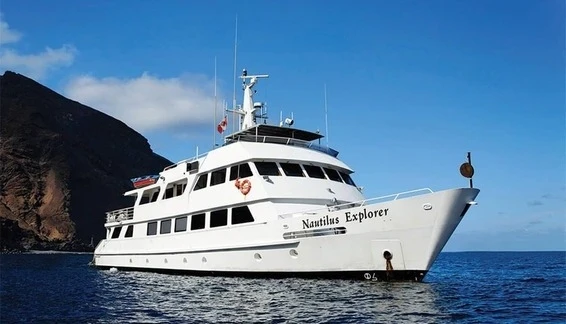
For experienced divers looking to explore the rich waters of Mexico’s Pacific coast, from the marine abundance of the Sea of Cortez to the legendary giant mantas of Socorro, the 132-foot Nautilus Explorer liveaboard offers a rare combination of expedition capability and genuine comfort. Built in Canada with a heavy steel hull and designed for ocean crossings, this vessel is equipped to handle the open-sea passages required to reach remote destinations like the Revillagigedo Archipelago and Magdalena Bay. As the world’s first dive vessel fully certified to SOLAS (Safety of Life at Sea) standards, and operating under an ISM safety management system, the same framework used by commercial cruise ships, the Nautilus Explorer brings a level of operational rigour that sets a high bar for safety offshore.
The layout of Nautilus Explorer gives you room to spread out: there’s a separate dining area, a main saloon with deep couches and a well-stocked bar, and multiple sundecks where you can find a quiet spot with ocean views. A freshwater hot tub on the upper deck is a welcome sight after a day in cool Pacific waters, and reliable satellite Wi-Fi means you can stay connected or back up dive photos without hassle. Accommodation ranges from well-designed 90 sq ft lower-deck staterooms all with private bathrooms and showers to a premium suite with a separate lounge, floor-to-ceiling picture window, and a full-sized bathtub. It’s practical, solid, and built for adults who appreciate attention to detail without unnecessary frills.
Diving operations are led by a crew with long experience in these Mexican waters. Whether you’re joining a Socorro dive expedition focused on mantas, or a Sea of Cortez safari, briefings are thorough and the pace of diving respects both safety and marine life. The vessel is equipped with Nautilus Lifeline units for diver location. Nitrox is available, and the dive deck is organised for efficiency without feeling rushed gear setups stay in place, and the tender operation for skiff-based diving is smooth and well-practised.
Meals are a cornerstone of life onboard the Nautilus Explorer liveaboard. The chef bakes fresh bread and pastries daily, soups are made from scratch, and there’s a clear emphasis on good food that satisfies after a long day in the water. The menu blends western dishes with occasional Mexican flavours, served either buffet-style or at the table. 4 meals a day, plus snacks, keep energy levels up, and most dietary requirements can be accommodated with advance notice.
With a maximum of 27 guests, the atmosphere is social but never crowded. The Nautilus crew takes visible pride in the vessel’s condition it’s the kind of ship where things work, surfaces are clean, and the team is approachable. One guest, a veteran of several liveaboards including vessels from well-known fleets, commented simply: "The Nautilus Explorer is the best so far". It’s the sort of endorsement that carries weight because it’s rooted in comparison and experience. From the granite peaks of Socorro to the bait balls and sea lions of the Midriff islands, the Nautilus Explorer liveaboard opens up Mexico’s Pacific marine parks with a blend of seakeeping confidence and genuine hospitality.
Sea of Cortez South
Trip highlights: whale sharks, hammerhead sharks, shark action, dolphins, manta rays, whales, seals/sea lions, schooling fish & big pelagics
Diving environment: advanced divers, beginner divers, drift diving, wall diving
Dive sites and activities: Cerralvo Island, Las Animas, La Reina, Espiritu Santo, Salvatierra wreck, Fang Ming, San Jose. Kayaking, paddle boarding, swimming, hike into the hills, whatever you want. Backscatter Imaging workshop at SeeCreatures.
7-night trips also visit Loreto National Park: Coronado, Danzante, Carmen Island.
Day 1
efore boarding, stop by the SeeCreatures Dive Center in Cabo San Lucas to complete check-in formalities. If your schedule allows, join the complimentary Backscatter Imaging workshop held in the afternoon - a useful session for anyone wanting to get the most from their underwater photography setup. Boarding the Nautilus Explorer liveaboard begins in the early evening. Once provisioning is finished and final preparations are complete, the vessel departs for the Sea of Cortez. Dinner is served as the coastline recedes.
Core Days
Over the following days, the Nautilus Explorer liveaboard moves through the southern Sea of Cortez, a region where volcanic islands rise from deep water and nutrient-rich currents support dense marine life. The tours includes up to 4 dives per day, with sites chosen for both pelagic encounters and reef structure. Around Cerralvo Island and Las Animas, submerged pinnacles attract schools of jacks and bonito, while hammerhead sharks are sometimes seen along the deeper edges of these formations. At La Reina, the focus shifts to large marine life: giant mantas frequently visit cleaning stations on the rocky reef, their wingspans easily exceeding four metres as they circle slowly above the divers.
Espiritu Santo Island offers a contrast. Here, the protected waters around Los Islotes are home to a colony of California sea lions. Juveniles often approach closely, making for extended interactions in clear, shallow water. The island’s coastline also provides opportunities for activities between dives - kayaking along the cliffs, paddleboarding in sheltered coves, or hiking into the arid hills for views across the sea. The schedule allows for a beach landing at dusk, with drinks served as the sun drops behind the Sierra.
2 wreck dives add variety. The Salvatierra, a passenger ferry sunk as an artificial reef, rests upright on a sandy bottom, her upper decks now thick with filter feeders. The Fang Ming, a 65-metre Chinese trawler, lies in deeper water nearby, her hull intact and accessible to experienced divers. Both attract large schools of creolefish and snapper, with morays and scorpionfish occupying the wreckage.
For longer Nautilus Explorer trips, the route extends north into Loreto National Park. Around Coronado, Danzante, and Carmen Island, the diving is defined by steep walls and boulder-strewn slopes. Here, the water can be cooler and the currents more noticeable, but the reward is encounters with large aggregations of mobula rays from mid-May through July. During these months, the same conditions that draw the rays can also attract orcas, occasionally seen hunting in the area. Whale sharks are another seasonal possibility, with females over 10 metres sometimes appearing near the surface in early summer.
Throughout the week, the spotter plane assists in locating marine life, reporting the position of dolphin pods, whale activity, or ray schools. This information guides the Nautilus Explorer captain’s decisions, allowing the liveaboard to adjust course when something significant is seen. Between dives, there is time to review images in the saloon, discuss the day’s observations with the guides, or simply watch the desert landscape pass from the sundeck.
Final Day
The Nautilus Explorer liveaboard returns to Cabo San Lucas in the morning. After a final breakfast, guests disembark and transfers are provided to local hotels or the airport.
These trips use either La Paz or Cabo San Lucas as ports.
Sea of Cortez South (Adventure) (8 Days / 7 Nights - 24 Dives)
Trip highlights: hammerhead sharks, shark action, dolphins, manta rays, seals/sea lions, schooling fish & big pelagics, non diving activities
Diving environment: advanced divers, beginner divers, drift diving, wall diving
Dive sites and activities: La Paz, Las Animas, La Reina, El Bajo, Espiritu Santo, San Franciscito, Loreto, San Pedro Martir. Kayaking. paddle boarding. swimming, hike into the hills, whatever you want.
Day 1
The trip begins in Cabo San Lucas, where guests make their way to the Nautilus dive center to complete check-in formalities and confirm dive arrangements. Boarding takes place in the afternoon, allowing time to settle into your cabin and familiarize yourself with the vessel's layout. Dinner is served on board as the Nautilus Explorer liveaboard prepares to depart. Once everyone has eaten, the ship clears the marina and begins its overnight run toward the islands south of La Paz. The first morning will find you anchored in calm water, ready to begin.
Core Days
The week ahead traces a route through the southern Sea of Cortez, with the historic town of Loreto marking the northernmost reach of the circuit. This is an diving tour of variety. One dive might find you finning alongside a sea lion colony in clear shallows, while the next drops you onto a seamount where hammerheads sometimes materialize from the blue. Early dives often take place around the islands south of La Paz, including Espiritu Santo and Las Animas, where sea lions occupy entire coves and the water tends toward calm. At La Reina, a pinnacle rises from sand flats, and the action is constant: sea lions spinning past, schools of barracuda holding in the current, and the occasional green turtle cruising the edge of visibility. The guides pay close attention to conditions and marine activity, adjusting the schedule to put you in the water where the life is most present.
As the Nautilus Explorer liveaboard moves north toward Loreto, the character of the diving shifts. This stretch of the Sea of Cortez is defined by steep walls, rocky reefs, and pinnacles that rise from deep water, creating ideal conditions for both pelagic encounters and dense reef life. Strong nutrient flow supports large schools of fish, with snapper, jacks, grunts, and sardines among them, which in turn draw predators such as yellowtail, tuna, and reef sharks. From mid-May through July, Loreto becomes the stage for one of the region's most iconic natural events: mobula ray aggregations. Rays gather in synchronized formations over deep blue water, their wingtips occasionally breaking the surface as they move in unison. These encounters are a key highlight of the tour, though they unfold on their own schedule; patience and a quiet approach are rewarded.
Dolphins are frequently encountered throughout the region, often approaching with evident curiosity. Whale sharks appear during the warmer months, particularly in early summer when plankton concentrations increase near the surface. While sightings can never be guaranteed, Loreto is regarded as one of the more reliable areas in the gulf for these gentle giants during this window.
The liveaboard trip may also include offshore seamounts such as El Bajo, where hammerhead sharks are sometimes encountered on deeper profiles, particularly where currents draw cooler, nutrient-rich water up from the depths. Other sites offer calmer conditions ideal for extended bottom time and observing macro life such as nudibranchs, blennies, and crustaceans hiding among volcanic rock formations.
Beyond diving, there is time to slow down. The Nautilus Explorer liveaboard carries kayaks and stand-up paddleboards for exploring sheltered inlets, and shore landings offer opportunities to walk along quiet beaches or, for those inclined, hike into the hills for a different perspective on the landscape. Evenings in protected anchorages invite conversation on the sundeck or a quiet soak in the hot tub as the sky shifts through its colors.
Day 8
On the final morning, after breakfast, guests disembark in the vessel returns to port in La Paz and arrange onward travel to the airport or a local hotel.
Sea of Cortez South (Mobula Ray Special) (8 Days / 7 Nights - 5 Dives)
Trip highlights: dolphins, whales, schooling fish & big pelagics, non diving activities
Diving environment: advanced divers, beginner divers, drift diving, wall diving
Dive sites and activities: Locations are flexible, depending on where the aerial support finds the mobulas and orcas. Often the best area is the triangle near La Paz between Espiritu Santo, Carpenter Rock (on the west side of Cerralvo), and Las Ventanas on Baja California
Day 1
Afternoon check-in happens at the Nautilus dive centre in Cabo San Lucas. You sort out rental gear, go over final paperwork, and have the option to join a short underwater photography workshop focused on backscatter techniques - useful for the pelagic action ahead. Later, you board the Nautilus Explorer liveaboard in La Paz. Cabin allocation, boat orientation, and safety briefings come first, then dinner as the vessel pulls away from port.
Core Days
This itinerary shifts its focus away from conventional scuba (although some dives are available). The main event happens at the surface. For several days, the Nautilus Explorer tracks seasonal gatherings of mobula rays - animals that measure roughly 1.5 to 2 metres across and travel through the Sea of Cortez in impressive numbers. At certain times of year, these rays form large moving groups in open water, and they're known for launching themselves clear of the surface, a behaviour you can often see from the deck.
Spotter aircraft assist the search. When the pilots locate a significant aggregation, you board a high-speed support boat and enter the water in small groups, typically on snorkel or freediving gear. The goal is quiet observation. Mobulas don't react well to splashing or chasing, so the crew emphasizes calm approaches. Stay still, and the rays may circle close. Orcas - killer whales reaching up to 9 metres in length - sometimes pass through these same waters, drawn by the presence of the rays. Sightings are never guaranteed, but when they happen, they tend to dominate the day's conversation back on the boat.
Evenings bring a different kind of show. When the Nautilus Explorer anchors in sheltered bays, the vessel's lights often attract mobulas after dark. You can watch from the deck or slip into the water for a closer look as the rays move through the illuminated water, feeding on plankton drawn to the light.
Between ray encounters, the afternoons open up. Kayaks and paddleboards are available for exploring calm shorelines. When conditions allow, the crew finds landing spots for short beach walks - bare feet on sand, a chance to stretch legs that have spent hours on boats. The Baja coast here is rugged and sparsely populated, which is exactly the point.
Cabo Pulmo National Park features on the second-to-last day. This marine reserve holds some of the Sea of Cortez's healthiest reef systems. You can dive or snorkel here, depending on the group's preference. Large schools of jacks and snappers move over the coral, groupers sit under ledges, and the sheer density of fish makes the place feel alive in a way few other sites manage. It's a different kind of encounter - not pelagic and wide-open, but rich and close.
Day 8
The Nautilus Explorer returns to Cabo San Lucas in the morning. Breakfast, then disembarkation at the marina. The crew can help arrange taxis to hotels or the airport.
Some departures use La Paz as the port instead of Cabo - exact embarkation and disembarkation points get confirmed before your trip. Either way, the diving and snorkelling stay the same.
Sea of Cortez South (Whale Shark Special) (8 Days / 7 Nights - 24 Dives)
Trip highlights: whale sharks, shark action, dolphins, manta rays, seals/sea lions, schooling fish & big pelagics, non diving activities
Diving environment: advanced divers, beginner divers, drift diving, wall diving
Dive sites and activities: La Paz, Bahia de Los Angeles, Las Animas, Isla San Ildefonso, San Pedro Martir, La Reina, Espiritu Santo, San Franciscito, Loreto, Mulegé. Spotter planes, snorkel with whale sharks, beachcombing.
Day 1
This whale shark special trip gets underway with an evening check-in at the Nautilus office in Cabo San Lucas. Once paperwork is complete, a complimentary coach transfer brings you north to La Paz, where the Nautilus Explorer liveaboard waits at the dock. Boarding is straightforward: the crew meets you on the aft deck, shows you to your cabin, and leaves you to settle in. As the vessel clears the marina and heads out into the night, dinner is served in the saloon, a relaxed first opportunity to talk through the week ahead with the dive guides and fellow guests.
Core Days
In the week that follows, the Nautilus Explorer liveaboard works through the southern Sea of Cortez with a flexible plan, one that allows the captain and guides to respond to conditions as they unfold. The goal is straightforward: put you in the water when and where you can snorkel with whale sharks. From late summer into early autumn, the waters around Bahia de Los Angeles and the plankton-rich areas north of La Paz draw these animals in noticeable numbers. Spotter planes sometimes assist in locating the aggregations, their pilots relaying positions to the bridge. When a whale shark is found, the procedure is quiet and respectful. Guests slip from the tender into the water and swim alongside at a measured pace, watching the animal's spotted pattern glide past as it filters the surface. The same upwellings that attract the sharks also bring other cetaceans into the area, such as fin whales and sperm whales are occasionally seen on the horizon, though their appearances follow no schedule.
Below the surface, the region offers a full spectrum of diving. At San Pedro Martir, an offshore seamount that rises from deep water, currents sweep across the peak and draw in schools of hammerhead sharks. They tend to appear along the edge of visibility, moving with a purpose that feels ancient. Grouper and snapper hold in the crevices, while yellowtail and tuna cruise the outer edges. At La Reina, the action is different: sea lions spin through the water column, mantas pass over the cleaning stations, and the rocky reef holds schools of barracuda that catch the light at certain angles.
Around Las Animas, the underwater terrain shifts to boulder fields and sloping walls. This is where octopus find their hiding places, where moray eels peer from shadows, and where the macro life rewards those who slow down and look closely. Nudibranchs and crustaceans move among the volcanic rock, their colors standing out against the dark stone. Hammerheads appear here as well on occasion, particularly when cooler water pushes in from depth. At San Franciscito, a pinnacle rises from the depths cloaked in black coral and gorgonian fans. Green turtles rest in the shallows above, their shells carrying the patina of age. The site has a stillness to it, a sense of depth that registers even in calm conditions.
Further north, Espiritu Santo and Los Islotes bring the sea lions. These colonies are lively places underwater. The younger animals in particular approach with curiosity, spinning and circling before darting away. The water around the rocks holds cardinalfish and damselfish in dense aggregations, and the jacks that patrol the edges keep things in motion.
Between dives, there is room to experience the Baja peninsula from a different angle. Shore landings on the islands themselves offer opportunities to watch blue-footed boobies on the cliffs, their courtship rituals unmistakable, or simply sit on the sand and let the light change. The Nautilus Explorer liveaboard carries kayaks and paddleboards for those who want to explore sheltered coves, though doing nothing at all is an equally valid option.
Day 8
The final morning finds the Nautilus Explorer liveaboard moored in La Paz. After breakfast, guests disembark and board the coach for the transfer south to Cabo San Lucas, arriving in time for afternoon departures.
Socorro Islands
Trip highlights: whale sharks, hammerhead sharks, shark action, dolphins, manta rays, whales, schooling fish & big pelagics
Diving environment: advanced divers, drift diving, off the beaten track, wall diving
Dive sites and activities: San Benedicto, Roca Partida, Socorro Island
Days 1-2
Your trip begins in Cabo San Lucas. Head to the Nautilus base at SeeCreatures during the early evening on day one to handle check-in. If you arrive ahead of schedule, you can leave your luggage, explore the shops along the marina, or take part in the no-cost photo workshop to get your camera settings dialed in with guidance from the onboard specialist. In the evening, you'll board the Nautilus Explorer liveaboard. Once the safety orientation is complete and everyone is settled, the vessel departs on its overnight crossing toward the Revillagigedo Archipelago. The following day is given over to life at sea. You might set up your dive kit, listen to a talk about the region's ecology, or simply claim a spot on the sundeck and watch the Pacific roll past as the sun drops toward the horizon.
Core Days
The next several days are spent exploring three of Mexico's most isolated volcanic outposts: San Benedicto, Socorro Island, and the sheer pinnacle of Roca Partida. The Nautilus Explorer liveaboard crew uses tenders to bring guests to each site based on conditions and individual comfort levels. The pace allows you to absorb the distinct character of each location.
At San Benedicto, the dive site known as the Boiler is the primary draw. This submerged seamount serves as a cleaning station where giant mantas congregate with dependable regularity. They appear from the blue with slow, deliberate wingbeats, often circling divers for extended periods. These animals have grown accustomed to human presence over years of encounters, and they sometimes pass close enough that you can make out the unique spot patterns on their undersides, patterns the crew uses to track individuals across seasons. On the deeper sections of the same site, schools of hammerhead sharks occasionally cruise along the drop-off, their silhouettes appearing and fading in the distance.
Socorro Island presents a different underwater terrain. At sites like Cabo Pearce and Punta Tosca, lava flows from ancient eruptions have formed slopes and ridges now draped in black coral and whip corals. The water here holds large aggregations of creolefish and amberjack, their numbers dense enough to shift the quality of the light. Dolphins move through these areas regularly, sometimes approaching divers with what appears to be genuine curiosity. Between November and March, humpback whales frequent the waters around Socorro. Their songs carry through the water column, and on the surface it is not uncommon to see a pair resting or a male launching himself clear of the sea.
Roca Partida occupies its own category. This rock pinnacle rises from abyssal depths with no shallow reef system, just vertical walls dropping into darkness. Currents tend to run here, and the diving is unambiguously pelagic. Silky sharks circle in loose formations, joined by Galapagos sharks and the occasional tiger shark during certain seasons. Schools of skipjack tuna move through with purpose, and wahoo cut across the periphery.
Final Day
On the last morning, the Nautilus Explorer liveaboard pulls into Cabo San Lucas. After breakfast, guests go ashore and arrange onward travel to the airport or a local hotel. The week covers a remarkable stretch of the eastern Pacific: mantas working cleaning stations, sharks holding in current, whales sounding in the blue.
[Information is best estimate in ideal circumstances and subject to changes beyond our control. The itinerary is a guide only and may be adapted to best suit the weather, tides, currents, availability and other prevailing events. Price is for the cruise, not for an exact number of dives].
Onboard the Nautilus Explorer liveaboard, the rhythm at sea is tuned perfectly, with the daily schedule built around maximising your time in the water while ensuring you return to a genuinely welcoming atmosphere. Mornings start early but gently, with coffee and light snacks laid out before the first briefing, giving you time to wake up and prepare your kit as the Baja coastline comes into view.
The Nautilus crew understands that liveaboard diving is hungry work. Breakfast is a hearty, cooked affair, fuelling you for the first 2 dives. Lunch is a relaxed, deli-style spread, allowing everyone to grab what they want and eat at their own pace between sites. But it is the evening meal that stands out as a cornerstone of the experience. The chef focuses on imaginative, fresh cuisine, making soups from scratch, baking bread, buns, and pastries daily, and preparing desserts that are a genuine highlight. You might find a rich, homemade soup followed by a perfectly seared piece of local fish, or a tender beef dish with a subtle Mexican twist the menu draws from North American, European, and regional flavours.
What makes the dining work so well on the Nautilus Explorer liveaboard is the setting and service. Meals are served in the air-conditioned dining room, a space filled with natural light from large windows that often frame a million-dollar ocean view. The service itself mixes the convenience of a buffet for starters and salads with plated, waitress-served main courses, adding a touch of civility to the evening. Between dives, you are never far from a snack, be it fresh cookies, fruit, or a scoop of ice cream. Coffee, tea, and soft drinks are complimentary throughout the trip, with beer, wine, and spirits available from the well-stocked bar.
Life aboard extends well beyond the dining table. After your final dive, the main saloon becomes a social hub, with comfortable couches perfect for editing photos, diving into the library, or watching a presentation about the next day's sites. Up on deck, the hot tub is a justifiable draw and a chance to soak under the stars, letting the warm water ease tired muscles. Drink service up here means you don't have to stray far from the conversation.
There is ample time built in to find your own corner of the ship whether that's on the sundeck with a book, or in the quiet of the lounge filling out your logbook. The crew, from the chef to the 2 hostesses, takes pride in looking after guests, and this extends to accommodating dietary needs. Whether you are vegetarian, gluten-free, or have other requests, a cheerful effort is made to cater for you, provided the office has advance notice.
In essence, the daily routine aboard this Nautilus Explorer liveaboard is about creating a comfortable, well-managed home at sea. You can be confident that when you surface after each dive, a warm meal, a cold drink, and a welcoming ship are waiting.