Notes: Mexico is a popular destination with limited liveaboard spaces. We recommend you book well in advance to avoid disappointment.
Dive experience: All certified divers may dive on these Sea of Cortez liveaboard cruises with the Nautilus Gallant Lady.
Cruise price per person includes: Cabin accommodation, breakfast, lunch, dinner, snacks, drinking water, soft drinks, hot drinks, dives (as detailed in the safaris above), experienced English-speaking divemasters (1 guide for 5 scuba divers), complimentary photography workshop, standard tanks, weights and weight belts, Nautilus Lifeline marine rescue GPS, SMB safety sausage, sales tax.
Sea of Cortez Whale Adventure trips also include hotel and luxury camp accommodation, and all activities mentioned in the itinerary description.
Cruise price per person excludes (mandatory, unless customer provides own): Scuba gear (USD 255 per week), dive computer (USD 50 per week), snorkelling equipment, dive insurance, park fees (Socorro: USD 192 per diving day) payable in advance by guests directly to the liveaboard, port fee per cruise (USD 35). Note: park fees are waived for retirees and pensioners over the age of 60 years old. A 75% discount on park fees is available for active students and teachers. Unless otherwise stated, all the listed items need to be paid on arrival (cash or credit card).
Optional extras: Alcoholic drinks, steel and specialized tanks, nitrox fills for enriched air divers (USD 20 per day), rebreather support (including zorb), gas mixes. Unless otherwise stated, all the listed items need to be paid on arrival. Note: prices of items purchased onboard are subject to change.
How to get there: The MV Nautilus Gallant Lady liveaboard departs in the afternoon from Cabo San Lucas for safaris to the southern areas of the Sea of Cortez. Guests fly into Los Cabos International Airport (SJD), approximately 45 minutes drive from Cabo San Lucas.
You must meet at the See Creatures Dive Center no later than 11 am on the morning of boarding. It is located at Calle Miguel Hidalgo 10, Centro, Cabo San Lucas. Ideally you should arrive the previous day and drop by the dive center as soon as you get to town to make sure you are fully prepared for the trip. A complimentary photography workshop at 1 pm is conducted before boarding Nautilus Gallant Lady around 2:30 pm. The boat sets sail that afternoon and you can enjoy cocktails as the boat heads north.
The last dive of the trip will be at around 5 pm on the second last day of the trip. Please wait at least 18 hours before flying after diving. You will disembark at around 8 am on the morning of the last day. We recommend you book any outwards flights on that day no earlier than 11 am.
For more details, including airlines, on how to get to the Sea of Cortez, see our Mexico tourist information section.
Non-diver rate: None.
Single supplement (if you do not want to share accommodation): This is optional - single travelers may choose to share a cabin or pay a supplement of 25% for their own cabin on Sea of Cortez (Cabo Pulmo) trips.
Dive clubs and group discounts: Group discounts are available. Please check with us. See whole boat charter rate.
Whole boat charter rate (per night): Pay for 11 guests and 1 extra person can join the cruise in a Superior Suite free of charge (total 12 guests).
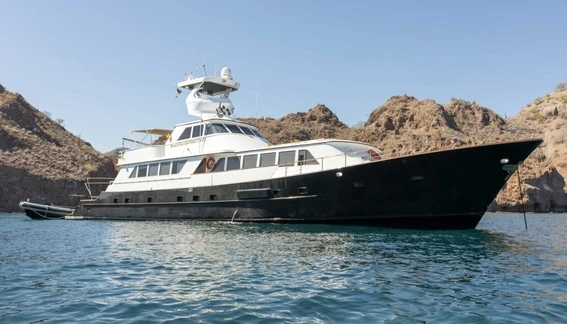
For experienced divers seeking direct access to the marine richness of Mexico’s Sea of Cortez, the Nautilus Gallant Lady liveaboard is a great choice. This 116 foot (35m) motor yacht is designed for groups of no more than 12 guests, ensuring a personalised experience focused on the underwater world outside your cabin. From the big-volume action of the Gulf of California to the seasonal sardine run in Magdalena Bay, this vessel provides a stable and comfortable platform for accessing some of Baja’s most productive dive sites.
Built for long-range expeditions, the Nautilus Gallant Lady liveaboard features stabilisers for a smoother ride and cruises at 15 knots. The dive deck is practical and uncluttered, with individual gear lockers, a large platform for easy entries and exits, and a camera table for handling sensitive equipment. Between dives, you’ll find the lounge and dining area a relaxing space, its wrap-around windows offering uninterrupted views of the desert coastline and sea. For those who appreciate staying connected, a stabilised satellite Wi-Fi system is on board.
Above deck, the options for downtime are varied. You can stretch out on the sundeck, soak in the sky lounge’s hot tub, or climb to the crow’s nest for a panoramic view of the Sea of Cortez at sunset. This is a space that encourages you to inhabit the whole Nautilus liveaboard adventure, whether you’re reviewing your day’s images or simply watching for surface activity. Non-diving days on some tours can also include kayaking, paddleboarding, or even a desert hike, adding a terrestrial dimension to your trip.
Accommodation is in 6 large suites, a key feature of the Nautilus Gallant Lady liveaboard. The cabins are genuinely spacious, with flexible bedding configurations that convert from king-size to twins, suiting couples and groups of friends alike. All cabins have private ensuite facilities, and one suite even includes a full-size bath a rare find on any liveaboard. After a day in the salt, the comfort of a well-appointed cabin is a welcome retreat.
Diving operations are geared towards experienced divers. The Nautilus Gallant Lady liveaboard is rebreather-friendly and equipped with nitrox to extend your bottom time. Safety protocols include the use of Nautilus lost diver devices, and the crew are attentive to your needs the moment you surface, with fresh drinks and snacks ready. The cruises are built around the region’s famous encounters: schooling hammerheads, mobula rays by the thousand, whale sharks, and the hunting marlin of the sardine run. This is big, wild country, and the diving reflects that.
Choosing the Nautilus Gallant Lady liveaboard places you in the heart of the Baja California action with a crew that knows these waters intimately. The combination of a small guest count, a spacious yacht, and direct access to the Sea of Cortez’s marine highways creates a genuine expedition feel. For certified divers ready to explore Mexico’s underwater bounty, the Nautilus Gallant Lady offers both the range and the refined comfort to do it in style.
Magdalena Bay
Trip highlights: shark action, dolphins, whales, schooling fish & big pelagics, non diving activities
Diving environment: advanced divers, off the beaten track
Dive sites and activities: Snorkelling, free-diving and scuba diving in Magdalena Bay, SS Independence and USS Seawolf.
Day 1
This expedition to witness the spectacular sardine run begins with a visit to the Nautilus dive center in Cabo San Lucas on the day of departure. Here you'll complete check-in procedures and collect any pre-arranged rental equipment. In the early evening, you step aboard the luxury Nautilus Gallant Lady liveaboard. Once everyone is settled and the orientation is complete, the vessel departs Cabo San Lucas and begins the 15-hour crossing north toward Magdalena Bay. Dinner is served as the coastline fades into dusk.
Core Days
The days that follow are given over to the waters off Magdalena Bay during October and November, when seasonal upwellings create one of the eastern Pacific's most productive marine environments. This period marks the second-largest sardine run in the world, drawing significant concentrations of striped marlin that gather to hunt the dense bait balls forming near the surface. The action is fast-moving and visually striking - marlin slicing through schools of sardines, their bills visible as they turn, while pelicans and gannets plunge from above. Snorkelling and freediving are often the most effective ways to witness these events, given the speed and shallow nature of the encounters, though scuba diving remains part of the daily schedule.
California sea lions appear regularly, their forms visible on rocky outcrops and in the water. Pods of common and bottlenose dolphins move through the channels, sometimes approaching the vessel with evident curiosity. Wahoo and yellowfin tuna patrol the edges of the bait balls, their shapes cutting through the blue. Humpback whales are on the move through these latitudes during this window, migrating south toward their breeding grounds. While encounters with larger whales can never be guaranteed, their presence adds to the sense of anticipation that accompanies each day on the water.
The area also offers some wreck diving. The SS Independence, a passenger steamship that met its end here decades ago, rests on the bottom in depths accessible to certified divers. Its structure is now draped in sponges, hydroids, and soft corals, attracting schools of reef fish. A World War I-era submarine lies in nearby waters, its silhouette recognizable despite the years of encrustation.
Between dives, there is time to absorb the broader ecosystem. The waters here attract abundant seabird life - brown pelicans working the surface, frigate birds wheeling overhead, shearwaters skimming the waves, and on occasion, albatross riding the wind at the edge of visibility. The Nautilus Gallant Lady liveaboard carries kayaks and paddleboards for those who want to explore the calm margins of the bay, and shore landings offer opportunities to walk along empty beaches when conditions allow.
The crew structures each day around conditions and animal movements, launching tenders when something is spotted on the horizon. The dive deck remains organized for quick entries, with individual gear lockers and space for camera preparation.
Final Day
The Nautilus Gallant Lady liveaboard returns to port in Cabo San Lucas. After a final breakfast on board, guests disembark and arrange taxi transfers to local hotels or the airport. The week covers a remarkable chapter in the eastern Pacific: striped marlin working bait balls and whales on migration.
Sea of Cortez South (6 Days / 5 Nights - 16 Dives)
Trip highlights: whale sharks, hammerhead sharks, shark action, dolphins, manta rays, whales, seals/sea lions, schooling fish & big pelagics
Diving environment: advanced divers, beginner divers, drift diving, wall diving
Dive sites and activities: Cerralvo Island, Las Animas, La Reina, El Bajo, Espiritu Santo, Los Islotes, Salvatierra wreck, Fang Ming, San Jose. Kayaking, paddle boarding, swimming, hike into the hills, whatever you want. Backscatter Imaging workshop at SeeCreatures.
Day 1
Make your way to SeeCreatures in Cabo San Lucas when you arrive in town to complete check-in formalities. While you're there, we encourage you to join the complimentary Backscatter Imaging workshop, a practical session to refine your underwater photography skills with guidance from specialists who know these waters. As early evening approaches, you'll step aboard the elegant Nautilus Gallant Lady liveaboard. Cocktail hour begins once you're settled, a chance to meet the crew and fellow guests on the aft deck. Once provisioning is finished and final preparations are complete, the liveaboard heads out into the night. Dinner is served as the lights of Cabo fade astern, the yacht making its way toward the southern Sea of Cortez.
Core Days
The days that follow are given over to exploring the southern Sea of Cortez, a stretch of water designated as a UNESCO World Heritage Site for its remarkable biodiversity and productive marine environment. The Nautilus Gallant Lady liveaboard crew adjusts plans based on conditions, currents, and animal movements. The goal is to put you in the water when and where the life is most present.
From mid-May through July, this region sees large aggregations of mobula rays moving through in synchronized formations. These events are a primary draw during this window, rays gathered in numbers, their wingbeats coordinated as they glide through blue water. Where the mobulas concentrate, other predators often follow. The same months mark peak season for whale sharks in the bay of La Paz, the large females arriving to filter plankton in nutrient-rich upwellings. Snorkelling alongside them requires no certification, only a willingness to swim at their pace.
At El Bajo and Las Animas, offshore seamounts rise from deeper water, their slopes attracting schools of hammerhead sharks that appear along the edge of visibility. The currents here can be strong, and the diving rewards those comfortable with open-water conditions. At La Reina, giant mantas visit cleaning stations with regularity, circling slowly as smaller fish pick parasites from their skin. The site also holds schools of jacks and barracuda that catch the light at certain angles.
Los Islotes is home to a sea lion colony where the younger animals often approach divers with obvious curiosity. They spin and circle, sometimes pausing close enough to examine you before darting away. Around Espiritu Santo and Cerralvo Island, rocky reefs hold green turtles resting in the shallows. Schools of creolefish and amberjack move through in dense formations, and the volcanic slopes are draped in gorgonian fans and black coral.
The region also offers wreck diving. The Salvatierra rests on the bottom, its structure now encrusted with marine growth and home to schooling fish. The Fang Ming, a Chinese trawler sunk intentionally, provides habitat for bat rays and the occasional octopus hiding among its beams.
Between dives, there is space to experience the Baja peninsula from the surface. The vessel carries kayaks and paddleboards for exploring sheltered coves. Shore landings offer opportunities to walk along empty beaches or, for those inclined, hike into the hills for a view of the sea from above. The landscape is stark and beautiful, with desert meeting ocean in a line of rugged cliffs and arroyos.
Day 6
The Nautilus Gallant Lady liveaboard arrives back in Cabo San Lucas. After one last breakfast on board, guests disembark and transfer to the airport or a local hotel.
Sea of Cortez South (Adventure) (8 Days / 7 Nights - 24 Dives)
Trip highlights: hammerhead sharks, shark action, dolphins, manta rays, seals/sea lions, schooling fish & big pelagics, non diving activities
Diving environment: advanced divers, beginner divers, drift diving, wall diving
Dive sites and activities: La Paz, Las Animas, La Reina, El Bajo, Espiritu Santo, San Franciscito, Loreto National Park: Coronada, Danzante, Carmen islands; San Pedro Martir. Kayaking. paddle boarding. swimming, hike into the hills, whatever you want.
Day 1
This expedition begins with a late afternoon check-in at the Nautilus dive center in Cabo San Lucas. After completing formalities and confirming arrangements, you'll join the coach transfer to La Paz. Boarding the luxury Nautilus Gallant Lady liveaboard takes place in the early evening, the crew welcoming you on the aft deck as you settle into your cabin. Once everyone is aboard and preparations are complete, the vessel slips its moorings and heads out into the Sea of Cortez. Dinner is served as the sun sets over the water, a relaxed beginning to the week ahead.
Core Days
The days that follow are given over to exploring the southern Sea of Cortez, a stretch of water designated as a UNESCO World Heritage Site for its remarkable biodiversity and productive marine environment. The Nautilus Gallant Lady liveaboard schedules up to 4 dives each day, with the crew adjusting plans based on conditions, currents, and animal movements. The route traces a clockwise loop from La Paz north toward Loreto, then returns south through some of the gulf's most distinctive dive sites.
As the Nautilus Gallant Lady moves north, the character of the diving shifts. Loreto National Park encompasses 3 main islands: Coronado, Danzante, and Carmen, each surrounded by waters that support dense marine life. The underwater terrain here is defined by steep walls, pinnacles, and rocky reefs that rise from deeper water. Strong nutrient flow sustains large schools of fish: snapper, jacks, grunts, and sardines congregate in numbers that shift the quality of the light. These aggregations draw predators such as yellowtail, tuna, and reef sharks, their shapes appearing along the edges of visibility.
From mid-May through July, the waters around Loreto host one of the Sea of Cortez's most distinctive natural events: large aggregations of mobula rays. They move through in synchronized formations as they glide over deep blue water. On occasion, they launch themselves clear of the surface, a behavior that is thrilling to witness. These encounters are a key draw during this window, though they unfold on their own schedule; patience and a quiet approach are rewarded.
The islands of Loreto National Park also offer reliable encounters with bottlenose dolphins, which appear frequently and sometimes approach with evident curiosity. Sea lions inhabit several of the rocky outcrops, their colonies offering interactions where young animals in particular spin and circle before darting away. Whale sharks appear during the warmer months, especially in early summer when plankton concentrations increase near the surface. Loreto is regarded as one of the more reliable areas in the gulf for these gentle giants during this period.
Further south, beyond the park boundaries, offshore seamounts like El Bajo and Las Animas rise from deeper water. Here, hammerhead sharks are sometimes encountered on deeper profiles, their shapes materializing along the edge of visibility where currents draw cooler, nutrient-rich water up from the depths. At La Reina, giant mantas visit cleaning stations with regularity, circling slowly as smaller fish pick parasites from their skin. The site also holds schools of jacks and barracuda that catch the light at certain angles.
Around Espiritu Santo and San Franciscito, the rocky reefs hold green turtles resting in the shallows. The volcanic slopes are draped in gorgonian fans and black coral, and macro life rewards those who slow down and look closely, since nudibranchs, blennies, and crustaceans hiding among the rock formations. The calmer conditions at these sites allow for extended bottom time and a different pace of diving.
Further offshore, Isla San Pedro Martir rises from deep water where upwellings fuel dense food chains. This site offers walls encrusted with life and the possibility of encountering sharks or large rays along the deeper ledges. The currents here can be strong, and the diving rewards those comfortable with open-water conditions.
Between dives, there is room to experience the Baja peninsula from the surface. The vessel carries kayaks and paddleboards for exploring sheltered coves. Shore landings offer opportunities to walk along empty beaches or, for those inclined, hike into the hills for a view of the sea from above. The landscape is stark and beautiful.
Day 8
The Nautilus Gallant Lady liveaboard returns to port in La Paz. After a final breakfast on board, guests disembark and transfer by coach to Cabo San Lucas or directly to the airport.
Sea of Cortez South (Mobula Ray Special) (8 Days / 7 Nights - 5 Dives)
Trip highlights: dolphins, whales, schooling fish & big pelagics, non diving activities
Diving environment: advanced divers, beginner divers, drift diving, wall diving
Dive sites and activities: Locations are flexible, depending on where the aerial support finds the mobulas and orcas. Often the best area is the triangle near La Paz between Espiritu Santo, Carpenter Rock (on the west side of Cerralvo), and Las Ventanas on Baja California
Day 1
Your Sea of Cortez ocean safari begins in Cabo San Lucas. After a final equipment check at the Nautilus dive center, you’re invited to join a complimentary underwater photography workshop, a chance to refine your technique before the encounters ahead. At 7:30 pm, you step aboard the Nautilus Gallant Lady liveaboard. Following a welcome briefing that covers the vessel’s layout and safety, you’ll settle in over dinner as the engine hums to life, setting course for Cabo Pulmo and the open waters of the Sea of Cortez.
Core Days
This expedition is built around one of the Sea of Cortez’s most dynamic natural events: the migration of mobula rays. These rays, often 5 to 7 feet across, gather in schools thousands strong, their acrobatic leaps a constant spectacle on the surface. With support from spotting planes for 3 days, the crew uses real-time aerial intel to position the Nautilus Gallant Lady liveaboard in the path of the largest aggregations. The action often unfolds in the triangle of nutrient-rich water between Espiritu Santo Island, the granite pinnacles of Carpenter Rock off Cerralvo, and Las Ventanas on the Baja peninsula. From a high-speed skiff, small groups slip into the water for snorkel or freediving encounters as the rays glide past, unconcerned, in seemingly endless formations.
Where mobulas gather, orcas often follow. To witness a pod of these apex predators moving through the blue, their dorsal fins slicing the surface, then disappearing into the depths in pursuit of prey, is to see the ecosystem in full balance. Encounters are never guaranteed, but the crew’s dedication to reading animal behaviour and following regulations means you are in the best possible position should they appear. Afternoons bring a change of pace: kayak along a remote shoreline, hike a desert beach, or simply watch from the deck as the light softens. On one evening, the focus shifts after dark when the boat’s lights draw clouds of plankton into a calm bay, and with them mobulas gathering to feed, visible from the surface or on a night dive.
Before the safari concludes, the Nautilus Gallant Lady turns to Cabo Pulmo National Park. Here, a protected reef system thrives with life: huge aggregations of jacks, schools of snapper, and the gentle presence of bull sharks. It’s a reminder that the same waters sheltering transient giants also hold enduring, resident abundance.
Day 8
You wake to the gentle sway of the boat at anchor near La Paz. After a final breakfast on deck, there’s time to swap stories with fellow guests before disembarkation. A transfer returns you to Cabo San Lucas or San José del Cabo airport, the images of vast, open-ocean encounters still fresh in mind.
Sea of Cortez South (Whale Shark Special) (8 Days / 7 Nights - 24 Dives)
Trip highlights: whale sharks, shark action, dolphins, manta rays, seals/sea lions, schooling fish & big pelagics, non diving activities
Diving environment: advanced divers, beginner divers, drift diving, wall diving
Dive sites and activities: La Paz, Bahia de Los Angeles, Las Animas, San Pedro Martir, La Reina, Espiritu Santo, San Franciscito, Loreto. Spotter planes, snorkel with whale sharks, beachcombing.
Day 1
This whale shark special expedition commences with a late afternoon check-in at the Nautilus dive center in Cabo San Lucas. Once paperwork is complete and any rental gear is sorted, you'll board the coach transfer to La Paz. Stepping onto the luxurious Nautilus Gallant Lady liveaboard, the crew greets you on the aft deck and shows you to your cabin. With luggage stowed and formalities finished, the vessel slips its moorings and heads out into the Sea of Cortez as evening settles in. Dinner is served once underway, a relaxed opportunity to meet fellow guests and talk through the week ahead with the dive guides.
Core Days
The week ahead is guided by the movement of animals and the conditions of the sea. The Nautilus Gallant Lady liveaboard navigates the southern and midriff regions of the Gulf of California with a plan that remains fluid, allowing the captain and dive guides to adjust based on daily sightings, weather patterns, and water temperatures. The objective is to put you in the water where the life is most concentrated.
A central element of this expedition is the chance to snorkel with whale sharks. From late summer through early autumn, the plankton-rich waters around Bahia de Los Angeles and the channels north of La Paz attract significant numbers of these gentle giants. Spotter planes may be deployed to help locate aggregations, their pilots communicating with the bridge of Nautilus Gallant Lady in real time. When a whale shark is sighted, the approach is measured and deliberate. Guests enter the water quietly from the tender and swim alongside at a respectful distance, observing the distinctive spot patterns that identify individuals as they filter the surface. The same upwellings that concentrate plankton also draw other cetaceans: pilot whales, fin whales, and occasionally Bryde's whales appear on the horizon, their presence adding to the sense of abundance.
Below the surface, the range of encounters expands considerably. At San Pedro Martir, an offshore seamount rising from deep water, currents funnel nutrients that attract schools of hammerhead sharks. They materialize along the edge of visibility, often moving in loose formations before fading into the blue. Creolefish and amberjack crowd the water column, while leopard sharks sometimes cruise the sandy patches near the base. At La Reina, the action takes on a different character: Pacific spotted dolphins occasionally move through, and mobula rays glide past in small groups. Sea lions arrive from nearby colonies to investigate divers, their movements quick and playful.
Around Las Animas, the terrain becomes more complex, with boulder fields and sloping walls shelter an array of life. Green moray eels extend from crevices, their heads tracking movement. Octopus hide among the rocks, changing color as they shift position. Schools of Mexican goatfish sift through the sand, and trumpetfish hover vertically near gorgonian fans, waiting to ambush smaller prey. On deeper profiles, scalloped hammerheads sometimes appear, drawn by cooler water pushing up from below.
At San Franciscito, a pinnacle cloaked in black coral and hydrocoral rises toward the surface. The walls are home to king angelfish and streamer hogfish, their colors vivid against the dark backdrop. Hawksbill turtles rest on ledges, and in the water column, skipjack tuna pass through with purpose. The site has a quiet intensity, the kind of place where you become aware of the depth beneath you.
Further north, Espiritu Santo and Los Islotes offer some of the gulf's most reliable encounters. The sea lion colonies here are active and curious, with juveniles approaching closely before spinning away. The surrounding reefs hold Cortez rainbow wrasse and sergeant majors in abundance, and panamic greeneyes hover in the shade of overhangs. Night dives in this area reveal a different world: basket stars extend their arms into the current, octopus hunt across open sand, and sleeping parrotfish are cocooned in mucus.
Between dives, there is space to absorb the Baja peninsula from a different angle. Loreto's beaches are often empty, the water clear and calm against white sand. Shore landings on the islands offer opportunities to watch brown boobies and magnificent frigatebirds working the cliffs, or simply to walk and let the landscape settle in. The Nautilus Gallant Lady liveaboard carries kayaks and paddleboards for exploring sheltered coves, though finding a quiet spot on the beach with no particular plan is an equally valid way to spend an afternoon.
Day 8
The Nautilus Gallant Lady liveaboard moors in the marina at La Paz. After a final breakfast on board, guests disembark and transfer by coach to Cabo San Lucas, arriving in time for afternoon flights or onward connections.
Sea of Cortez Whale Adventure (8 Days / 7 Nights - 0 Dives)
Trip highlights: dolphins, whales, seals/sea lions, non diving activities, onboard experts on wildlife and natural history
Diving environment: advanced divers, beginner divers, drift diving, wall diving
Dive sites and activities: La Paz, Isla Espiritu Santo, Loreto, San Ignacio Lagoon. Whale, dolphin and sea lion watching with spotter planes and local guides.
Day 1
Your adventure begins in Cabo with a morning of humpback whale watching, accompanied by your own personal naturalist. After a thrilling few hours on the water, an afternoon transfer takes you to a boutique hotel on a quiet beach in La Paz, where you settle in for the night and prepare for the days ahead.
Core Days
This is a voyage to seek out some of the ocean's greatest spectacles. Over 8 days, you will move through 3 distinct Baja environments: the calm bays of La Paz, the wild northern reaches of the Sea of Cortez, and the legendary nursery of San Ignacio Lagoon. The Nautilus Gallant Lady liveaboard carries you through the middle stretch, but this expedition is defined by what lies beyond the deck rail.
Days 2 - 4
This mark the heart of the expedition and where the Nautilus Gallant Lady liveaboard comes into its own. You begin with a day at Isla Espíritu Santo, a UNESCO-protected island where the water teems with life. Here you snorkel with the resident sea lion colony, their inquisitive nature making for an unforgettable encounter. The island also offers opportunities for kayaking, nature walks, and a beach lunch in a setting that feels wonderfully remote.
From there, the yacht heads north towards Loreto National Park. This stretch of the Sea of Cortez is prime territory for blue whales and humpback mothers with their calves. You are supported by an observation aircraft, which scouts ahead to locate these magnificent animals across the vast seascape. When the spotter plane signals a sighting, the captain adjusts course accordingly. You might find yourself observing the sheer bulk of a blue whale breaking the surface, or watching a humpback calf practising its breaches alongside its mother. Fin whales and large pods of dolphins are also frequent companions. One evening, the crew organises a special treat: cocktails on a remote beach, the sun dipping below the desert horizon as you reflect on the day's encounters.
Day 5
The day begins with a morning flight to San Ignacio Lagoon, the gray whale nursery that draws visitors from across the globe. The Nautilus Gallant Lady liveaboard stays behind, but your journey continues in extraordinary fashion. Upon landing, staff greet you at the airstrip with champagne and hot apple cider, followed by a short transfer to the San Ignacio luxury camp. After brunch and a welcome briefing, a naturalist introduces you to the gray whales and what to expect. The afternoon is yours. Most guests head out for 2 whale-watching encounters, but others choose to relax at camp or explore alternative activities.
Days 6 - 7
These days are spent entirely within San Ignacio Lagoon. All operators in the lagoon work cooperatively to maximise guest experience while ensuring no negative impact on the whales. Encounters take place in a small defined area, with pangas taking turns entering the restricted zone for a maximum of 90 minutes. Departure times are fixed by the operators, so you choose your preferred rhythm. Option 1: breakfast at 7 am after watching the sunrise over the sierras, then head out at 7:45 am for several encounters. Option 2: sleep in, enjoy a relaxed breakfast, and join the 9:45 am departure for the second session of the day.
Afternoons offer a range of activities, weather permitting. Kayaking or paddleboarding through the mangroves on the opposite side of the lagoon provides a different perspective. You might visit a local village to learn about turtle conservation efforts, or join a naturalist for mountain biking, hiking, or bird watching. Alternatively, simply stay at camp to relax, read, or play a game of billiards. Evenings are marked by cocktail hour, sunset viewing, and conversation around the fire pits, often followed by a naturalist presentation that deepens your understanding of these remarkable creatures.
Day 8
Breakfast, then one last whale-watching encounter, always dependent on weather. The flight back to SJD Los Cabos arrives by 1:30 pm. If you are flying home this day, book a return flight after 3:30 pm. Otherwise, transfer back to Cabo office for your onward travel plans.
[Information is best estimate in ideal circumstances and subject to changes beyond our control. The itinerary is a guide only and may be adapted to best suit the weather, tides, currents, availability and other prevailing events. Price is for the cruise, not for an exact number of dives].
A day onboard the Nautilus Gallant Lady liveaboard is one with a rhythm set as much by the Sea of Cortez as by the crew. You wake to the light through your suite’s porthole, the yacht either underway or already anchored in the lee of an island. Coffee is waiting, and soon the aroma from the galley signals breakfast. This is when you begin to understand the emphasis the crew places on keeping everyone well-fed. The spread includes fresh pastries, a fruit plate, homemade granola, and yogurt, alongside cooked-to-order eggs, omelettes, and hash browns . It is a practical, hearty start to a day that will demand energy.
Between dives, the pattern is one of easy sociability. Back on board, someone is usually pulling off their wetsuit as a crew member appears with a tray of something perhaps a cold drink, or a freshly made smoothie that guests quickly learn to look forward to. The chef, whether it is Poncho or another of the talented cooks on the Nautilus Gallant Lady liveaboard, prepares a buffet lunch that leans into the region. One afternoon it might be fish tacos with all the accompaniments; another day, homemade pizzas or quesadillas fresh from the oven. You eat on the upper deck, or in the dining room with its wrap-around views, often with a book or a conversation about the morning’s highlights.
As the afternoon winds down, there is time to make use of the hot tub, or to stretch out on the sun deck cushions and watch the light shift across the water. The crow’s nest is a popular spot for those hoping to spot a distant whale blow or a pod of dolphins. The Nautilus captain and crew keep a flexible schedule; if someone spots something interesting, they will often adjust the plan. It is this responsiveness that defines the experience.
Dinner is an event, though a relaxed one. Meals are plated or served family-style, a fusion of Mexican and West Coast North American cooking that makes use of fresh local produce. One evening might feature a rich mole, another a perfectly grilled piece of fish. The liveaboard chef is known to accommodate dietary needs with notice, and occasionally, there are surprises like a small cake to celebrate a guest's 100th dive. After dinner, people drift to the lounge for a movie, or to the bar for a drink under the stars.