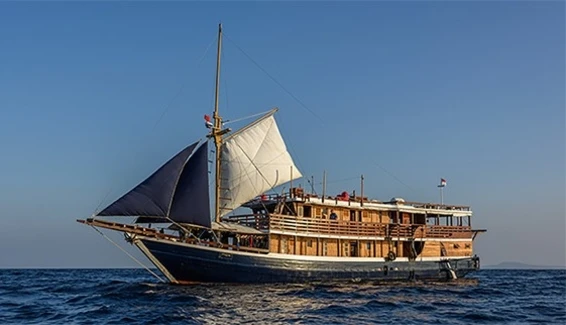
Bali, Sumbawa & Komodo (Whale Shark Special)
Trip highlights: whale sharks, shark action, dolphins, manta rays, turtles, great macro life/ marine diversity, schooling fish & big pelagics, non diving activities
Diving environment: advanced divers, beginner divers, drift diving, healthy reefs, off the beaten track, very popular, wall diving
Dive sites and activities: from Bali: Gili Tepekong, Nusa Penida; Sumbawa: Moyo, Satonda, Saleh Bay, Sangeang; Komodo: Gili Lawa, Padar, Batu Balong, Tatawa, Siaba, Pink Beach, Gili Banta. Snorkel with whale sharks, Waterfall visit, Padar viewpoint trek, Komodo dragon walk.
Trips that use Maumere harbour also dive at Palue and Babi Island.
Day 1
You are welcomed aboard the Mari liveaboard at Serangan Harbour in Bali, where the crew greet you with a cool drink and a brief orientation. After settling into your cabin and setting up your dive gear, the vessel departs along Bali’s eastern coastline. A check dive at Gili Tepekong provides a gentle introduction: white-tip reef sharks rest beneath rocky ledges while healthy hard corals support active reef fish populations. As the afternoon unfolds, lunch is served and the Mari sets course east toward Sumbawa.
Core Days
The expedition pushes east across a chain of volcanic islands, each bringing a distinct character to the diving. At Moyo Island, coral bommies rise from pale sand slopes where leaf scorpionfish blend into their surroundings and green turtles graze among plate corals. Between dives, a short jungle walk leads to Mata Jitu Waterfall, a cool break in the tropical heat before the afternoon dive at Satonda’s colourful reef slopes.
Then comes Teluk Saleh. Beneath traditional Bagan fishing platforms, whale sharks gather to feed on baitfish, creating encounters that are calm and remarkably intimate. You enter the water 2 or 3 times over the course of the day, alternating between snorkelling and diving depending on how the animals move. There is no chasing, no crowding, just quiet time in the water with one of the ocean’s most enigmatic species.
Further east, Sangeang Volcano announces itself on the horizon. The black sand slopes of Bubble Reef release streams of volcanic gas, while the nutrient-rich waters support mimic octopus, frogfish, and ghost pipefish. A night dive here reveals bobtail squid and the subtle movements of crustaceans that emerge after dark.
The Mari then crosses into Komodo National Park. Castle Rock and Crystal Rock are seamounts exposed to strong currents. Grey reef sharks circle above the reef crest, giant trevallies hunt through fusilier schools, and napoleon wrasse visit cleaning stations. The Cauldron offers a controlled drift through a narrow channel where the tidal flow accelerates before releasing into a sandy basin. These are dives that demand attention and reward it with encounters that define this part of Indonesia.
Midway through the week, the cruise balances high-energy sites with moments above the water. A trek to the summit of Padar Island delivers the classic view across 3 crescent-shaped bays. On Komodo Island, a ranger guides you through the habitat of the Komodo dragon, the ancient predator that gives the park its name. There is also time to relax at Pink Beach, where the sand takes its blush from crushed red coral and the adjacent reef holds turtles and schooling snappers.
Further west toward Banta Island, sites like Three Sisters and Star Wars offer submerged pinnacles and volcanic formations that attract eagle rays and grey reef sharks. The Mari liveaboard crew adjusts each day’s plan to give you the best exposure to these diverse marine environments.
Day 12
After a final breakfast aboard, there is time to gather your gear and exchange contact details with fellow divers. A transfer takes you to Denpasar Airport or your chosen accommodation in Bali, leaving you with the quiet satisfaction of an expedition that has spanned three distinct regions and delivered the best each has to offer.
Banda, Ambon & Forgotten Islands (13 Days / 12 Nights - 34 Dives)
Trip highlights: hammerhead sharks, shark action, turtles, great macro life/ marine diversity, schooling fish & big pelagics
Diving environment: advanced divers, drift diving, healthy reefs, off the beaten track, wall diving
Dive sites and activities: Forgotten Islands: Nusnitu, Dawera, Wetar, Babar, Terbang: Selatan, Utara; Damar, Nil Desperandum, Serua, Gili Manuk; Banda Sea: Banda Islands, Suanggi, Nusa Laut, Ameth, Ambon Bay. Land visit on Banda Neira.
Day 1
Arrive in Saumlaki and make your way to the harbour, where the Mari liveaboard awaits. Once onboard, settle into your cabin, get your dive gear organised, and join the crew for a safety orientation and overview of the days ahead. As the boat gets underway, the first meals are served in the open-air dining area - a relaxed introduction to life at sea.
Core Days
This route threads its way through the Indonesian archipelago's most volcanically active region, where the seafloor heaves upward in steep, nutrient-charged ascents. Around Nusnitu and Dawera, the diving unfolds along dramatic walls that hold their own against the open ocean; fusiliers pack the water column, and the topography alone leaves an impression of how remote this corner of the Ring of Fire truly is. Moving east toward Wetan and Babar, submerged pinnacles rise from the depths, their faces thick with gorgonian fans and barrel sponges. Currents sweeping through the channels between islands often bring dogtooth tuna into view, and reef sharks are a regular presence along the drop-offs.
The islands of Terbang, both Selatan and Utara, sit at a point where the underwater landscape shifts. Narrow passages concentrate flow, drawing pelagic species closer to the reefs. Schools of barracuda hold formation in the blue, while the shallower bommies and patch reefs support dense aggregations of anthias. Further out, the isolated volcanic outcrops of Damar, Nil Desperandum, and Serua see few liveaboards each year. The coral here shows minimal signs of impact, and hammerhead sharks are known to patrol the deeper water. At Gili Manuk, the slopes attract banded sea kraits in impressive numbers - a dive best approached with a relaxed pace and respect for the resident wildlife.
Reaching the Banda Islands, there is a chance to step ashore on Banda Neira. The old forts and nutmeg plantations offer a tangible link to the spice trade era, a useful counterpoint to days spent underwater. Beneath the surface, the islands deliver walls that drop sharply into clear water, where surgeonfish and fusiliers move in dense, coordinated schools. Suanggi and Nusa Laut maintain that steep profile, but the final leg toward Ambon sees a shift in character. Ameth and Ambon Bay are known for muck diving of a high order: stargazers buried in silt, the endemic Ambon scorpionfish, and psychedelic frogfish all make appearances, often within a single dive. There is a particular quality to dusk dives here, with the Mari liveaboard sitting just offshore as the city lights begin to come up.
Day 13
After a final breakfast, guests prepare to leave the Mari in Ambon. Depending on flight schedules, there may be time for lunch before transfers to the airport or a local hotel. The crew will see you off from the dock, with the boat already being readied for its next departure.
Note that this cruise sometimes operates in reverse direction.
Banda, Ambon, Alor & Forgotten Islands
Trip highlights: hammerhead sharks, shark action, turtles, great macro life/ marine diversity, schooling fish & big pelagics
Diving environment: advanced divers, beginner divers, drift diving, healthy reefs, off the beaten track, wall diving
Dive sites and activities: Alor: Pulau Babi, Pantar, Pura, Wetar, Reong, Terbang: Selatan, Utara; Damar, Nil Desperandum, Serua, Gili Manuk, Banda Islands, Suanggi, Nusa Laut, Ameth, Ambon Bay. Land visit on Banda Neira.
Day 1
Board the Mari in Maumere and, after settling into your cabin, there is time to set up dive gear and listen to the safety and tour briefing. The boat slips its mooring and heads east, with the first meals served in the open-air dining area as the expedition begins.
Core Days
This extensive cruise traces a route through some of Indonesia’s most biologically rich waters, moving from the volcanic archipelagos east of Flores into the remote spine of the Banda Sea. The diving shifts in character as you go. Around Alor, sites like Pulau Babi and Pantar offer steep reef walls draped in gorgonian fans, while the sheltered bays of Pura and Wetar reward macro enthusiasts with the kind of creatures that demand slow, deliberate searching: ornate ghostpipefish, stargazers buried in sand, and the occasional rhinopias poised on a rubble slope.
Further east, the islands of Reong and Terbang (both Selatan and Utara) mark a transition. Nutrient channels funnel through the narrow passages, encouraging larger pelagic life to patrol the drop-offs. Dogtooth tuna and schools of barracuda move past in the blue, while the patch reefs and bommies host clouds of anthias. The remote outcrops of Damar, Nil Desperandum, and Serua are seldom visited, which means the coral cover remains thick and the resident reef sharks and schools of hammerheads show little hesitation. At Gili Manuk, the volcanic flanks attract dozens, sometimes hundreds, of banded sea kraits.
By the time the Mari reaches the Banda Islands, the history of the spice trade is visible in the colonial architecture onshore. A land visit to Banda Neira breaks the rhythm of the week, with time to walk the old fort and nutmeg plantations. Underwater, the islands deliver walls that plunge into clear water, where large schools of surgeonfish and fusiliers form shifting curtains. Suanggi and Nusa Laut continue the theme of steep topography with cleaner water, but the final stretch toward Ambon introduces a different style of diving altogether. The muck sites of Ameth and Ambon Bay are world-renowned for their sheer density of unusual life. Psychedelic frogfish, stargazers, and the endemic Ambon scorpionfish are all possible on a single dusk dive, often with the boat anchored within sight of the city lights.
Throughout the Mari liveaboard voyage, the diving remains varied enough that no single day repeats the last. You might spend one morning photographing pygmy seahorses on a shallow pinnacle, then drift a wall in the afternoon while white tip reef sharks pass below.
Final Day
The cruise concludes in Ambon. After a final breakfast (and sometimes lunch, depending on flight times), guests disembark for transfers to the airport or a local hotel. The crew and Mari vessel stay behind, readying for the next departure.
Note: this cruise sometimes runs in reverse so please check exact details.
Komodo National Park (8 Days / 7 Nights - 22 Dives)
Trip highlights: shark action, dolphins, manta rays, dugongs/manatees, turtles, great macro life/ marine diversity, schooling fish & big pelagics, non diving activities
Diving environment: advanced divers, drift diving, healthy reefs, very popular, wall diving
Dive sites and activities: Sebayur, Sabolan, Komodo: Batu Bolong, Tatawa, Siaba, Padar, Pink Beach, Three Sisters, Manta Alley, , Cannibal Rock, Horseshoe Bay, Yellow Wall of Texas, Makassar Reef, Crystal Rock, Castle Rock, Shotgun, and Rinca Island Komodo dragon visit.
Day 1
You are welcomed onboard the Mari liveaboard in Labuan Bajo, where the crew greet you with a cool drink and a brief orientation. After settling into your cabin and setting up your dive gear, the vessel cruises toward the sheltered reefs of central Komodo for a gentle check dive. The afternoon unfolds at a relaxed pace, with lunch served as the coastline slips behind you and the first hints of the park’s rugged beauty emerge.
Core Days
Over the following days, the Mari navigates the dynamic waters of Komodo National Park, a marine environment shaped by the powerful convergence of the Pacific and Indian Oceans. Each day brings three to four dives, timed to the tidal flows that feed these legendary reefs. Early mornings often begin at iconic sites like Batu Bolong, a coral-swathed pinnacle rising from deep water. Here, currents attract grey reef sharks, giant trevallies, and dense clouds of anthias that shift as one across the steep walls. Drift dives at Tatawa Besar and Tatawa Kecil let you glide over pristine coral gardens where turtles rest on ledges and schools of fusiliers stream past in the current.
The southern sector of the park delivers encounters of a different scale. At Manta Alley, oceanic mantas circle cleaning stations in plankton-rich water, their silhouettes passing overhead with unhurried grace. Nearby, Cannibal Rock rewards patient divers with a concentration of rare macro life: rhinopias, pygmy seahorses, ornate ghost pipefish, and the occasional flamboyant cuttlefish. Night dives in Horseshoe Bay reveal Spanish dancers, hunting octopus, and the subtle movements of crustaceans and small cephalopods that emerge after dark.
Between dives, the Mari weaves in land excursions that add another dimension to the expedition. A morning trek on Rinca Island, guided by local rangers, takes you into the habitat of the Komodo dragon. Later, a hike to the summit of Padar Island rewards you with a panorama of turquoise bays and volcanic ridges. There is also time to relax on Pink Beach, where the sand takes its blush from crushed red coral, and the adjacent reef holds healthy hard corals and resident reef sharks.
The northern sites bring a shift in energy. Castle Rock and Crystal Rock are seamounts swept by strong currents, where grey reef sharks patrol the reef crest and schools of jacks and trevally hunt in the blue. The Cauldron, known locally as Shotgun, offers a controlled drift through a narrow channel where the current accelerates before releasing into a calm sandy basin. These are dives that require focus and reward confidence, with encounters that stay with you long after the safety stop.
Throughout the expedition, the Mari liveaboard maintains a steady rhythm. Diving is balanced with generous surface intervals, good meals served in the open dining area, and the simple pleasure of watching islands pass from the shaded deck. The crew work with the tides and conditions, adjusting each day’s plan to give you the best possible exposure to Komodo’s extraordinary range of dive sites.
Day 8
After a final breakfast aboard, there is time to gather your gear, exchange contact details with fellow divers, and thank the crew who have looked after you for the week. A transfer takes you to Labuan Bajo airport or your chosen accommodation, leaving you with the quiet satisfaction of a well-run expedition through one of the world’s most remarkable marine parks.
Raja Ampat & Triton Bay
Trip highlights: whale sharks, shark action, manta rays, turtles, great macro life/ marine diversity, schooling fish & big pelagics
Diving environment: advanced divers, caverns, drift diving, healthy reefs, off the beaten track, wall diving
Dive sites and activities: Triton Bay, beach visit, tree kangaroo land visit, waterfall visit, Pisang Island, Raja Ampat - South East Misool, Boo, South Misool, Pelee, East Misool, Daram Islands, Dampier Strait, Manta Sandy, Cape Kri, Sardine Reef, trek to see bird of paradise, Mioskon
Day 1
You will be welcomed aboard the Mari liveaboard at Kaimana harbour, where the crew greet you with a cool drink and a brief orientation. After settling into your cabin and setting up your dive gear, the vessel departs into Triton Bay. A gentle check dive introduces you to the clear waters of West Papua. Lunch and dinner are served as the Mari cruises through the bay, with the evening spent anchored among the limestone islands that fringe this remote coastline.
Core Days
The expedition begins in Triton Bay, where the diving has a character all its own. Black forest gardens of sea whips and crinoids cover sloping reefs, with epaulette sharks moving among the coral heads. These small sharks have an unusual adaptation: they can use their fins to prop themselves across exposed reef flats, earning them the local name of walking sharks. The bay also offers the chance to encounter pilot whales and, on occasion, whale sharks that visit the area’s traditional fishing platforms. Between dives, the Mari crew arrange land excursions that take you inland to see the endemic tree kangaroos that inhabit the forested slopes above the bay, as well as waterfalls that tumble directly into the sea.
From Triton Bay the Mari crosses to Pisang Island, where the reefs show the first hints of what lies ahead in Raja Ampat. The crossing brings you to the southern reaches of Misool, one of the 4 main islands in the archipelago. At Daram and the surrounding islands, the diving opens up into something extraordinary. Sea fan forests stretch across submerged slopes, their branches home to pygmy seahorses that require slow, careful searching to spot. Schools of barracuda and batfish gather in the shallows, while the deeper contours attract passing manta rays that glide along the current-swept edges. The area around Boo and Fiabacet offers overhangs and swim-throughs draped in soft corals, with wobbegongs resting on sheltered ledges.
The expedition pushes north through East Misool and Pelee, where limestone karsts rise from emerald water and the reefs see fewer divers than any other part of the archipelago. Kaleidoscopic channels and protected bays reward patient divers with encounters that range from schooling sweetlips to the smallest of nudibranchs. The Mari liveaboard crew know these sites well and time each drop to coincide with slack periods or gentle current, depending on what each site demands.
The final section of the expedition enters the Dampier Strait, where nutrient-rich water channels between Gam, Waigeo, and Batanta. Cape Kri holds the world record for fish diversity on a single dive, and the site delivers on that reputation. Schools of fusiliers and trevally move through the current while reef sharks patrol the reef crest. At Manta Sandy, manta rays gather at cleaning stations in clear, calm water, allowing for extended observation. Sardine Reef lives up to its name with dense schools of baitfish that attract hunting tuna and barracuda. Mioskon offers bommies coated in soft corals, with large wobbegongs often visible on the shallow plateau.
Between dives, there are moments above the water that round out the expedition. A trek inland to see the red bird of paradise in its forest display grounds requires an early start, but the sight of these birds performing among the canopy leaves a lasting impression. The landscapes of Misool and the Dampier Strait, with limestone cliffs plunging into turquoise lagoons, jungle-clad islands, and hidden bays, provide a constant backdrop throughout.
Final Day
After a final breakfast aboard, there is time to gather your gear and exchange contact details with fellow divers. The crew arrange transfers to Sorong Airport or your chosen accommodation, leaving you with the quiet satisfaction of an expedition that has spanned two of Indonesia’s most remarkable marine regions.
Note: this cruise sometimes runs in reverse so please check exact port details for your trip.
Raja Ampat National Park South & Central
Trip highlights: shark action, manta rays, turtles, great macro life/ marine diversity, schooling fish & big pelagics
Diving environment: advanced divers, caverns, drift diving, healthy reefs, wall diving
Dive sites and activities: from Raja Ampat - Matan, Misool: Daram, Warakaraket, Fiabacet, Wayilbatan, Yellit, Wagmab, Balbulol, Sagof, Farondi, Jef Fam Islands, Penemu, Dampier Strait: Arborek, Gam, Waigeo, Mansuar, Cape Kri, Swandarek, Mioskon
Day 1
You are welcomed aboard the Mari liveaboard at Sorong harbour, where the crew greet you with a cool drink and a brief orientation. After settling into your cabin and setting up your dive gear, the vessel departs on a southwesterly course toward Misool. A check dive near Pulau Matan offers a gentle introduction to Raja Ampat’s waters before the overnight crossing. Lunch and dinner are served as the coastline slips behind you, with the evening spent cruising toward the southern reaches of the archipelago.
Core Days
The expedition begins in Misool, where limestone karsts rise from emerald water and the reefs below have seen fewer divers than the more frequented northern sites. The islands of Daram and Warakaraket are soft coral paradises. Walls draped in pastel fans and barrel sponges drop into clear water, while schools of barracuda and batfish gather around the shallows. At Fiabacet and Wayilbatan, the topography shifts to overhangs and swim-throughs, with pygmy seahorses clinging to gorgonian fans and the occasional wobbegong resting on sheltered ledges.
Further south, sites like Yellit and Wagmab offer a blend of dramatic structure and concentrated macro life. Nudibranchs in improbable colours, flatworms, and anemone crabs reward slow, patient diving. The Mari liveaboard anchors in protected bays where the jungle meets the sea, and there are opportunities to visit ancient cave paintings at Balbulol - hand stencils and animal figures that speak to a human presence here stretching back thousands of years.
From Misool the Mari turns north toward the Fam Islands and the west coast of Waigeo. The limestone seascape around Penemu delivers the classic Raja Ampat view: white cliffs plunging into ultramarine lagoons, with coral gardens spreading across shallow plateaus. A trek to the Penemo viewpoint reveals the distinctive karst formation that has become emblematic of the region. In the waters below, epaulette sharks move among coral heads at low tide, their unusual fins allowing them to prop across exposed reef flats.
The final section of the expedition crosses into the Dampier Strait, where nutrient-rich water channels between Gam, Waigeo, and Batanta. Cape Kri holds the world record for fish diversity on a single dive, and the site delivers on that reputation. Schools of fusiliers and trevally move through the current while reef sharks patrol the reef crest. At Arborek Island, wooden jetties have become living reefs, with soft corals colonising the pilings and resident schools of jacks sheltering beneath them. Mioskon offers bommies coated in soft corals and the chance to spot larger wobbegongs on the shallow plateau.
Throughout the expedition, the Mari crew work to time each dive for optimal conditions. The cruise balances current-swept dive sites with sheltered macro slopes, giving divers exposure to the full range of what Raja Ampat’s south and central regions have to offer.
Final Day
After a final breakfast aboard, there is time to gather your gear and exchange contact details with fellow divers. The crew arrange transfers to Sorong Airport or your chosen accommodation, leaving you with the quiet satisfaction of an expedition that has explored two distinct faces of the Coral Triangle’s richest marine environment.
Raja Ampat, Banda Sea & Ambon (13 Days / 12 Nights - 33 Dives)
Trip highlights: shark action, manta rays, turtles, great macro life/ marine diversity, schooling fish & big pelagics
Diving environment: advanced divers, caverns, drift diving, healthy reefs, off the beaten track, wall diving
Dive sites and activities: Raja Ampat: Three Rocks, Love Potion, Four Kings, Barracuda Rock, Misool: Wayilbatan, Nudi Rock, Batu Kecil, Fiabacet, Boo, Magic Mountain, Paul's Point, Koon. Banda Islands, Ambon
Day 1
Board the Mari liveaboard at Sorong harbour, where the crew greet you with a cool drink and a brief orientation. After settling into your cabin and setting up your dive gear, the vessel departs toward the reefs of southern Raja Ampat. A check dive near Pulau Matan offers a gentle introduction to the clear waters of West Papua. Lunch and dinner are served as the Mari cruises south, with the evening spent crossing toward the Daram Islands.
Core Days
This scuba transit trip begins in Misool, where limestone karsts rise from emerald water and the reefs below hold some of the highest marine biodiversity on the planet. At Wayilbatan and Fiabacet, sea fan forests stretch across submerged slopes, their branches home to pygmy seahorses that require slow, careful searching to spot. Nudi Rock and Batu Kecil deliver on their names: walls draped in soft corals and sponges, with nudibranchs in improbable colours appearing on almost every dive. Boo Island offers overhangs and swim-throughs where schools of barracuda and batfish gather in the shallows, while deeper contours attract manta rays that glide along the current-swept edges.
From Misool the Mari pushes east toward the Banda Sea. The crossing brings you to Koon Island, a conservation area where fishing is prohibited. The site is known locally as fish soup, a description that makes sense the moment you drop in. Dense schools of jacks, trevally, and fusiliers form moving walls of silver, with reef sharks patrolling the edges and the occasional tuna hunting through the mass. The nutrient-rich waters that feed this system also sustain the coral cover, which remains in exceptional condition.
The Banda Islands rise from deep water, their volcanic origins visible in the steep drop-offs and black sand slopes that characterise the diving here. There are submerged pinnacles that attract pelagic species in numbers rarely seen elsewhere. Hammerhead sharks pass through the deeper water during certain seasons, while grey reef sharks circle the pinnacle crests. The walls are draped in soft corals, big sponges, and wide sea fans, with butterflyfish, triggerfish, and batfish moving among the reef structures. A night dive near the volcano of Gunung Api reveals mandarinfish performing their evening mating dance, while frogfish and seahorses appear among the rubble slopes.
The expedition then turns toward Ambon, with a stop at Nusa Laut. The local community here protects the reefs against illegal fishing, and the results are evident. Big schools of jacks, rainbow runners, tuna, and Spanish mackerel move through the cleaner waters, while the coral gardens remain some of the healthiest in the region. The final days are spent near Ambon Bay, where the diving shifts to a different register. Pulau Pombo and the surrounding islands offer stunning soft coral gardens and a natural rock bridge at Pintu Kota. Inside the bay itself, muck diving in its purest form reveals an extraordinary concentration of rare macro life: flamboyant cuttlefish, wonderpus and mototi octopus, harlequin shrimp, and the elusive psychedelic frogfish, a species found nowhere else outside Bali.
Throughout the expedition, the Mari liveaboard crew work deliver dives for optimal encounters. The diving tour balances the current-swept pinnacles of Misool and the Banda Sea with the sheltered macro sites of Ambon, giving scuba divers exposure to the full range of what this remote crossing has to offer.
Day 13
After a final breakfast aboard, there is time to gather your gear and exchange contact details with fellow divers. The crew arrange transfers to Ambon Airport or your chosen accommodation, leaving you with the quiet satisfaction of a diving expedition that has crossed one of Indonesia’s most legendary sea passages.
Note: this cruise sometimes runs in reverse so please check exact port details for your trip.
Triton Bay (10 Days / 9 Nights - 31 Dives)
Trip highlights: whale sharks, shark action, turtles, great macro life/ marine diversity, schooling fish & big pelagics
Diving environment: advanced divers, drift diving, healthy reefs, off the beaten track, wall diving
Dive sites and activities: Triton Bay: Bagan fishing platforms, Adi Island, Faukate, Sokos, Bonso, NusRom, Ambia, Batu Jatuh, Rainbow Wall, Little Komodo, Namanuta
Day 1
You are welcomed aboard the Mari liveaboard in Kaimana, where the crew greet you with a cool drink and a brief orientation. After settling into your cabin and setting up your dive gear, the vessel remains in the sheltered waters near town. The afternoon is spent in the presence of gentle giants. Traditional Bagan fishing platforms attract resident whale sharks, and you have your first in-water sessions with them. These encounters set the tone for what lies ahead: an expedition into one of Indonesia’s most untouched marine frontiers.
Core Days
On this diving cruise, the Mari navigates a landscape of limestone islands, jungle-clad coastlines, and reef systems that receive few visitors. At Adi Island, the diving unfolds across healthy coral gardens and deeper contours where schooling fusiliers hover above bommies. Night dives here reveal cephalopods, crustaceans, and the subtle activity of reef predators moving through the dark.
The expedition pushes further into the Triton Bay region, where sites like Black Rock and Batu Manga offer encounters with pelagic species. These submerged ridges and pinnacles attract grey reef sharks, jacks, and trevallies that patrol the current lines. At Batu Jatuh, the dive profile combines coral slopes with the chance to observe reef sharks moving between cleaning stations. The Mari liveaboard crew work with the tidal exchanges to place divers at these sites when conditions are most favourable, ensuring each drop delivers the full measure of what these remote reefs have to offer.
Rainbow Wall stands as one of the signature dives in the region, its steep face draped in dense soft corals that run the length of the reef. It is a site that rewards wide-angle photography and quiet observation in equal measure. Nearby, Little Komodo lives up to its name with a healthy fish biomass that recalls the best of its more famous counterpart to the west. Drift dives through Pintu Arus take you along channels where the water movement brings in nutrients and keeps the reef systems exceptionally vibrant.
Between dives, the Mari anchors in secluded bays where the only sounds are the water against the hull and the occasional call of birds from the forested shore. There is a sense of genuine exploration here. Sites like Pulau NusRom and Teluk Macan Tutul offer sheltered conditions for relaxed diving, with soft coral fields and sandy patches that reward slow, deliberate searching. Macro life is abundant: pygmy seahorses cling to gorgonian fans, ornate ghost pipefish drift among crinoids, and the varied nudibranch species reflect the biodiversity that defines this part of West Papua.
Throughout the expedition, the Mari liveaboard balances scuba diving activities with generous surface intervals and the simple pleasure of watching islands pass from the deck. The crew adjust each day’s plan in response to conditions, giving you the best possible exposure to Triton Bay’s extraordinary range of dive sites without the pressure of a fixed schedule.
Day 10
After a final breakfast, there is time to gather your gear and bid your farewells. A transfer takes you to Kaimana airport or your chosen accommodation, leaving you with the quiet satisfaction of a well-run expedition through one of the world’s most remarkable and untouched marine areas.
Triton Bay & Forgotten Islands (13 Days / 12 Nights - 33 Dives)
Trip highlights: whale sharks, hammerhead sharks, shark action, turtles, great macro life/ marine diversity, schooling fish & big pelagics
Diving environment: advanced divers, drift diving, healthy reefs, off the beaten track, wall diving
Dive sites and activities: Triton Bay: Aiduma whale shark bagans; Pulau Bui, Uran, Kirkaf, Pulau Kur, Saudara, Gili Manuk, Serua, Nil Desperandum, Pulau Dai, Dawera
Day 1
You board the Mari liveaboard at Saumlaki harbour, where the crew greet you with a cool drink and a brief orientation. After settling into your cabin and setting up your dive gear, the vessel departs for a sheltered check dive at Nusnitu Coral Garden, a gentle introduction to the clear waters of the eastern Banda Sea. Lunch and dinner are served as the Mari cruises toward Dawera Island, with the evening spent crossing into one of Indonesia’s most remote diving regions.
Core Days
This Mari diving expedition begins among the northern Forgotten Islands, a chain so isolated that few liveaboards make the crossing. At Dawera, an offshore seamount rises from deep oceanic water, its slopes attracting trevallies, reef sharks, and dense schools of fusiliers. The wall dives here are steep and dramatic, draped in soft corals and sponges that cling to the volcanic substrate. Pulau Dai offers a different character: crystal-clear water over coral gardens, with swim-throughs and caverns carved into the reef structure where barracuda schools gather and turtles rest on sandy ledges.
The standout site in this region is Nil Desperandum, an exposed offshore seamount widely regarded as one of the Banda Sea’s premier locations for hammerhead encounters. The main ridge draws grey reef sharks and dense schools of jacks, while blue-water drift dives along the pelagic edge offer the chance, during the right season and conditions, to see scalloped hammerheads moving through the deeper water. This is pure ocean exposure, diving that demands attention and rewards it with encounters that stay with you.
The Mari then pushes south along the outer volcanic arc. Serua Island rises steeply from the Banda depths, its lava slopes and sheer walls dropping into open ocean. Visibility here is consistently excellent, with pelagic patrols frequent along the current lines. Manuk Island presents one of the most unusual dive experiences in Indonesia: a solitary volcanic cone where banded sea kraits gather in extraordinary numbers. Dozens, sometimes hundreds, of these marine snakes weave through coral crevices and across volcanic slopes, hunting with a calm tolerance of divers. Grey reef sharks patrol the deeper sections while trevallies and tuna cruise the blue beyond.
Mari then crosses to the island chain known as Kepulauan Tiga Saudara, where pristine reefs host surgeonfish, angelfish, and occasional pods of dolphins. Pulau Kur offers a mix of coral gardens, cavern passages, and macro-rich slopes. At Wirmaf, comprising Pulau Bui, Uran, and Kirkaf, the diving reaches another level. Uran’s deep wall drops into blue water, decorated with gorgonians and soft corals that attract trevallies and tuna. Kirkaf’s drift channel funnels nutrient-rich currents across reef ridges, with schools of jacks and barracuda moving through the water and reef sharks patrolling the current edges.
The final section of the expedition enters Triton Bay. The reefs around Aiduma feature towering coral bommies and dense soft coral growth, with swim-throughs and pinnacles that create habitat for turtles, trevallies, and barracuda. But the highlight here sits above the reef. Traditional Bagan fishing platforms attract resident whale sharks, and the Mari liveaboard dedicates a full day to in-water sessions with these gentle giants. Snorkelling and diving alternate as the sharks move between platforms, offering intimate encounters that rank among Indonesia’s most memorable wildlife experiences.
This Mari dive tour balances the blue-water exposure of the Forgotten Islands with the sheltered reefs and macro sites of Triton Bay, giving scuba divers exposure to the full range of what this remote crossing has to offer.
Day 13
After a final breakfast aboard, the crew arrange transfers to Kaimana Airport or your chosen accommodation, leaving you with the quiet satisfaction of an expedition that has crossed one of Indonesia’s most remote and rewarding sea passages.
Note: this cruise sometimes runs in reverse so please check port details for your trip.
Triton Bay, Banda Sea & Ambon (13 Days / 12 Nights - 34 Dives)
Trip highlights: whale sharks, whales, turtles, great macro life/ marine diversity, schooling fish & big pelagics
Diving environment: advanced divers, drift diving, healthy reefs, off the beaten track, wall diving
Dive sites and activities: Ambon: Pulau Pombo, Pulau Mamalan; Nusa Laut, Pulau Panjang, Pulau Nukus, Pulau Koon, Manuk, Pulau Kurkap, Pulau Seram, Triton Bay, Kaimana
Day 1
Bard the Mari liveaboard in Ambon harbour, where the crew greet you with a cool drink and a brief orientation. After settling into your cabin and setting up your dive gear, the vessel remains in the bay for a check dive among the muck sites that have made Ambon famous among macro enthusiasts. As the afternoon unfolds, lunch is served and the Mari sets course east toward Nusa Laut.
Core Days
The diving begins in the waters around Ambon, where the diving operates in a different register from what follows. Pulau Pombo and Pulau Mamalan offer pristine coral gardens and a dramatic natural rock bridge at Pintu Kota, but it is the muck sites inside Ambon Bay that draw photographers from around the world. Here, among black sand and rubble slopes, rare critters appear with remarkable consistency: flamboyant cuttlefish, wonderpus and mototi octopus, harlequin shrimp, and the elusive psychedelic frogfish. The Mari liveaboard crew know these sites intimately and time dives to coincide with the slack periods when the shyest creatures emerge.
From Ambon the Mari crosses to Nusa Laut, where the local community has protected the reefs against illegal fishing for generations. The result is some of the healthiest coral systems in eastern Indonesia. Walls draped in soft corals drop into clear water, with schools of jacks, rainbow runners, and tuna moving through the blue. In the shallow bay of Paperu, there is a chance to spot dugong grazing in the seagrass beds, a rare encounter in these waters.
The Mari liveaboard then moves deeper into the Banda Sea, stopping at Koon Island. A conservation area closed to fishing, Koon has become what locals call a fish bank. The dive site lives up to its nickname: dense schools of jacks, barracuda, and trevallies form moving walls of silver, with reef sharks patrolling the edges and the occasional tuna hunting through the mass. The nutrient-rich waters that feed this system also sustain exceptional coral cover. Nearby Kurkap Island offers a different experience: pristine turquoise water over coral gardens, with visibility that stretches for dozens of metres.
The Banda Islands themselves rise from deep water, their volcanic origins visible in the steep drop-offs and black sand slopes that characterise the diving here. The health of the coral reefs around Banda Neira is breathtaking. Walls are covered in soft corals, big sponges, and wide sea fans, with butterflyfish, triggerfish, and batfish moving among the reef structures. For those willing to venture deeper, there are opportunities to search for hammerhead sharks along the outer ridges of Pulau Run and Pulau Ai, where Napoleon wrasse and schools of black snapper also patrol the blue.
The final section of the expedition crosses to Triton Bay. The diving here shifts again: huge forests of black coral, rugged rock formations, and soft coral gardens that rank among the finest in Indonesia. The bay’s nutrient-rich waters attract resident pilot whales and squadrons of bumphead parrotfish, while epaulette sharks move among the coral heads. But the highlight sits above the reef. Traditional Bagan fishing platforms draw whale sharks that gather to feed on baitfish, and the Mari dedicates time to in-water sessions with these gentle giants, snorkelling and diving alternating as the sharks move between platforms, creating encounters that rank among Indonesia’s most memorable wildlife experiences.
Day 13
After a final breakfast aboard, there is time to gather your gear and exchange contact details with fellow divers. The crew arrange transfers to Kaimana Airport or your chosen accommodation, leaving you with the quiet satisfaction of an expedition that has spanned 3 distinct marine regions and delivered the best each has to offer.
Note: this Mari dive cruise sometimes runs in reverse.
[Information is best estimate in ideal circumstances and subject to changes beyond our control. The itinerary is a guide only and may be adapted to best suit the weather, tides, currents, availability and other prevailing events. Price is for the cruise, not for an exact number of dives].
Life aboard the Mari liveaboard settles into a rhythm that balances activity with important rest and relaxation. The crew’s approach to meals reflects a simple belief: good food matters. Menus vary from cruise to cruise, shaped by fresh produce picked up in port and the cook’s willingness to adapt. You might find Indonesian classics like ikan bakar (grilled fish with sambal) sitting alongside a Chinese stir-fry, Japanese-style preparations, or a straightforward Western breakfast. Barbecues appear when conditions suit, often timed with a scenic anchorage. There is no fixed menu, which means repeats are rare, and the kitchen makes an effort to accommodate vegetarian requests or dietary needs when advised in advance.
Mornings start early but without urgency. Around 6:30 am, a light pre-breakfast appears: coffee, tea, perhaps toast or fruit. The first dive often happens in the soft light of dawn, when the water is calm and the reef is just waking up. After returning, a full breakfast follows: eggs cooked to order, rice, fresh fruit, and sometimes a local specialty. The second morning dive departs once plates are cleared and gear is reset. The crew’s pace is steady, never rushed, leaving space to review what you saw or simply watch the coastline slide by.
Lunch lands around 12 noon, served in the covered outdoor dining area. Meals here are a social anchor. Plates are passed, stories of close encounters or tricky currents get swapped, and there is usually someone reaching for extra sambal. After eating, the afternoon opens up. Some guests retreat to a cabin for a nap; others stretch out on the upper sundeck with a book or drift into quiet conversation on the shaded forward deck. Chess or backgammon from the small library occasionally make an appearance. The pause lasts long enough to feel genuine, and the third dive of the day typically starts around 3 pm.
Afternoon dives are followed by snacks and a stretch of time that belongs to whoever is awake. A night dive is often offered, and the dive deck becomes a focused space of torch checks and briefings as the light fades. Dinner follows, usually between 7:30 and 8 pm, with the cook presenting something that matches the day’s mood: maybe a spread of Indonesian dishes with gado-gado and rendang, or a lighter meal if the next morning starts early. The bar is open for beer, wine, or a simple cocktail, though many guests find that a cold Bintang tastes best after a night dive.
Throughout the cruise, the dining area remains informal. Waitress service means plates arrive without fuss, and the crew often ask if guests would like to see something specific on the menu later in the trip. Water, tea, and coffee are always available; juices, soft drinks, and alcohol are additional extras.
There is no sense of being on a schedule the Mari liveaboard; instead, the crew maintains a flow that respects dive safety, rest, and the simple pleasure of eating well in good company. By the second day, guests tend to settle into it naturally: up with the light, into the water, meals shared with new friends, and evenings that end with a quiet deck and the sound of water against the hull. It is liveaboard life at its most straightforward, and for many, that is precisely what makes it memorable.