Dive experience: The minimum certification level is OPEN WATER and minimum of 30 logged dives to join Sokaraja liveaboard safaris. Otherwise Adventure Deep Diver course or Advanced Open Water Course is mandatory on board.
Cruise price per person includes: Cabin accommodation, breakfast, lunch, dinner, snacks, drinking water, hot drinks, port fees, dives (as detailed in the trips above), experienced English-speaking divemaster(s) (max. 4 divers per guide), torch, tanks, weights and weightbelts, sales tax.
Cruise price per person excludes (mandatory, unless customer provides own): Scuba equipment (USD 28 per day), Komodo National Park fees (week days: USD 17 per day, Sundays and holidays: USD 20 per day, ranger fee: USD 8). Fuel surcharge (USD 56 per trip) to be paid in advance. Unless otherwise stated, all the listed items need to be paid on arrival, cash (IDR only), bank card (+3%), or bank transfer.
Optional extras: Soft drinks, beer/wine, dive computer (USD 6 per day), 15 litre tank (USD 8 per day), diving insurance. Unless otherwise stated, all the listed items need to be paid on arrival. Note: prices of items purchased onboard are subject to change.
How to get there: Sokaraja's liveaboard cruises depart at 8:30 am from Labuan Bajo, Flores. Meeting point at the Dermaga KP3 - Waterfront Labuan Bajo at 8 am. You can fly direct to Labuan Bajo from Bali or Jakarta. Guests are recommended to arrive one day earlier to make sure no delay or cancellation from the airlines.
The last dive on all of these charters will be 12 noon on the final day, and then the boat returns and arrives in port for disembarkation at around 3-4 pm. Please wait at least 18 hours before flying after diving. For more details, including airlines, see our Komodo travel information section.
Non-diver rate: 20%.
Single supplement (if you do not want to share accommodation): This is optional - single travellers may choose to share a cabin or pay a supplement of 75% of the published price for their own double bed cabin.
Dive clubs and group discounts: See whole boat charter rate below.
Whole boat charter rate (per night): approx. 15% discount from individual prices.
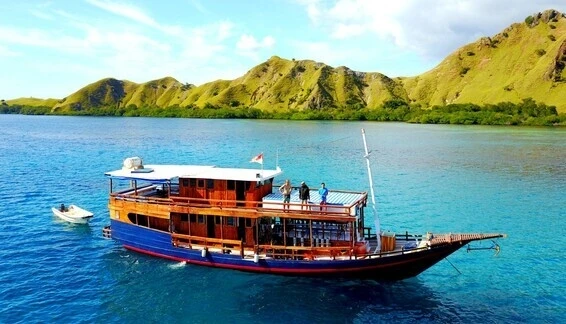
For divers who measure a trip not by thread count but by the quality of the current drift and the warmth of the crew’s welcome, the Sokaraja liveaboard hits a rare sweet spot. Operating year-round in Komodo National Park, this 25-metre wooden phinisi carries just 10 guests. That small number changes everything: less time waiting for kitting up, more space to breathe, and a genuine sense of shared adventure. The Sokaraja sits firmly in the ‘economy’ category, but do not mistake that for a lack of care. What you get instead is a stripped-back, honest boat that prioritises dive time, local character, and the kind of hospitality that turns first-time guests into returning friends.
Built in 2013, the Sokaraja boat’s layout is simple and practical. Accommodation breaks down into 2 double cabins and a 6-bed dormitory, the latter ideal for solo travellers, backpackers, or small groups who prefer spending their budget on extra dives rather than private bathrooms. Everyone shares 2 Western-style toilets and fresh-water showers. There is a solar panel system for power, and critically, the generator switches off at night. That means no engine hum. Just the lap of water against the hull and, if you are lucky, the distant call of flying foxes leaving their mangroves at dusk.
The dive deck sits amidships the Sokaraja. You gear up there, then either step straight off the platform for nearby sites or hop onto the 40 HP fibreglass speedboat for more distant reefs. Both DIN and yoke tank valves are available. Dive guides carry the kind of local knowledge you cannot fake , they know which sites work on a rising tide, where to find pygmy seahorses the size of a rice grain, and how to position a group for manta rays without crowding the cleaning station. Briefings are precise. Surface intervals are relaxed. And the schedule leaves room for more than diving: there are hikes to see Komodo dragons, viewpoints that overlook the famous pink beach, and that extraordinary sunset spectacle of thousands of bats lifting off from the island canopy.
Then there is the food. On a budget liveaboard like the Sokaraja, you might expect basic fuel. What you actually get is Indonesian home cooking, served buffet-style in the open-air communal dining area. Nasi goreng with a fried egg after the first morning dive. Rendang - beef slow-cooked in coconut milk and chillies until it falls apart. Fresh grilled fish with sambal. Vegetable stir-fries, banana fritters for afternoon snacks, and always a big bowl of fruit. The cook works from a tiny galley but turns out meals that have drawn genuine praise in guest reviews: 'the best we had in Indonesia', one diver wrote. Tea, coffee, water, and soft drinks run all day. Beer and wine are available too, usually saved for the sundeck’s huge mattress at sunset.
What gives the Sokaraja liveaboard its lasting appeal is the crew. Review after review mentions the same things: smiles, attentiveness, and a relaxed competence underwater. The divemasters are singled out for spotting everything from tiny nudibranchs to reef sharks and eagle rays, all while keeping briefings clear and dives safe. The boat’s owner handles bookings personally, answering questions and making sure divers arrive with the right expectations. It is not luxury. It is better: a small, well-run operation where the focus stays on the water, the wildlife, and the company of like-minded divers. For Komodo on a realistic budget, the Sokaraja delivers an experience that feels less like a product and more like being invited onto a friend’s boat for the week.
Sokaraja accommodates 4 guests in 2 double bed cabins on the upper deck. There is also a dormitory cabin with 6 bunk beds on the main deck, All guests share 2 bathrooms and a 3rd shower. Each bathroom has a toilet, fresh water showers, hand basin, and basic toiletries.
The cabin has:
- Individual fan cooling
- Windows
- Speaker for music
- Daily housekeeping
- Bedding and towel
- 24-hour, 220v electricity supply, European-style sockets
- Life jackets and fire extinguishers
No. of bathrooms / showers - 2 / 3 - cold water
Komodo National Park North
Trip highlights: shark action, dolphins, manta rays, dugongs/manatees, turtles, great macro life/ marine diversity, schooling fish & big pelagics, non diving activities
Diving environment: advanced divers, drift diving, healthy reefs, very popular, wall diving
Dive sites and activities: from Sebayur Kecil, Pengah Kecil, Central Komodo, Wainilu, Siaba Kecil, Siaba Besar, Batu Bolong, Police Corner, Tatawa Kecil, Mawan, Mawan Beach, Taka Makassar, Gili Lawa: Manta Point, Castle Rock, Crystal Rock, The Cauldron, Tatawa Besar, bats at Kalong, Gili Lawa Darat viewpoint hike, and Komodo dragon land visit on Rinca
Day 1
The Sokaraja liveaboard crew greets you at Labuan Bajo's harbour. Welcome drinks come first, then a boat orientation from the Cruise Director. You meet the dive guides and set up your station on the dive deck. The vessel heads into the park as you eat breakfast. Your check dive happens at Sebayur Kecil, a quiet sloping reef where the water stays calm, ideal for checking weights and refreshing skills. A second dive follows at Pengah Kecil, where the underwater terrain shifts between walls and plateaus. Eagle rays pass by. Parrotfish graze on the reef top. Juvenile whitetip sharks rest in sandy patches. As afternoon fades, the boat anchors off Kalong Island. You stand on the upper deck and watch thousands of fruit bats lift from the mangroves, their wings catching the last light. Dinner comes next, followed by a night dive at Wainilu. Frogfish sit on sponges. Sleeping fish tuck into crevices. Your torch beam picks out the strange glow of disturbed bioluminescent sand.
Core Days
The Sokaraja moves through northern Komodo with a rhythm that balances strong-current sites against sheltered ones. Siaba Kecil and Siaba Besar sit across a channel from each other. At Siaba Kecil, you drop into a drift that carries you past overhangs filled with whitetip reef sharks. The current does the work. You simply hover and watch. Giant trevally hunt the edges. Sweetlips and snapper crowd the coral heads. Siaba Besar offers something different: seagrass beds where flamboyant cuttlefish hunt and mimic octopus change shape in front of you. Turtles are everywhere on both sites, green and hawksbill, some sleeping under ledges, others grazing on sponges.
Batu Bolong stands as a pinnacle dive that defines central Komodo. The rock rises from deep water, its top just breaking the surface. Divers enter on the sheltered side, then round the corner into the current. The flow pushes you past gorgonian fans and clouds of anthias. Napoleon wrasse visit cleaning stations. Grey reef sharks circle below. Keep one eye on the blue: manta rays and dolphins sometimes pass through the channel. Police Corner, nearby, features a massive brain coral estimated at over a century old, with schools of fusiliers swirling above it.
Tatawa Kecil rarely appears on day boat schedules because the currents run hard. The Sokaraja liveaboard guides time the slack tide perfectly. You drop onto a slope where schools of humpback snapper, barracuda, and rainbow runners crowd the water column. A swim-through cuts through the rock, lit well enough that even nervous divers feel comfortable. Tatawa Besar, on the opposite side, offers a more relaxed drift dive past bumphead parrotfish and eagle rays.
Mawan and Taka Makassar handle the manta encounters. At Mawan, you drift over a gentle current as mantas circle cleaning stations. They come in close enough to see the white patches on their bellies. Taka Makassar sits shallower, an 8-to-10-metre drift over coral bommies and rubble. The mantas hover while butterflyfish and moon wrasses pick parasites from their skin. You kneel on the sand and watch. They do not seem to mind.
Then come the northern pinnacles. Castle Rock and Crystal Rock sit in the channels between Gili Lawa islands. These dives demand respect. Strong currents sweep past both rocks. You hook into the rock and let the water rush by. Surgeonfish school by the thousand. Giant trevally pick off stragglers. Grey reef sharks patrol the deeper edges. At Crystal Rock, the pinnacle rises from 40 metres to within 5 metres of the surface. The current here can switch direction mid-dive. Your guide watches the flow and signals when to move. The Cauldron offers a drift through a natural corridor. The water accelerates as the passage narrows. Corals line both walls. Reef sharks wait at the exit.
Between dives, Sokaraja anchors for 2 land excursions. On Rinca, you walk with a ranger across dry savanah. Komodo dragons bask near the watering holes. The big males do not move much. You keep your distance, but you feel their weight. Later, on Gili Lawa Darat, you climb to the ridge as the sun drops toward the horizon. The view takes in the northern channel, the scattered islets, and the wide spread of the Flores Sea. Other divers sit in silence. No one rushes back to the boat.
Final Day
Your last morning begins before most passengers are fully awake. 3 dives remain: Castle Rock, Crystal Rock, and a secret site that Sokaraja keeps for its own guests. The crew serves breakfast between the first and second dives. Lunch comes after the third. Then the boat turns south toward Labuan Bajo. You rinse your gear, fill out your logbook, and swap stories with other divers. The harbour appears mid-afternoon. You step ashore with a full camera card and a list of sites you want to dive again.
[Information is best estimate in ideal circumstances and subject to changes beyond our control. The itinerary is a guide only and may be adapted to best suit the weather, tides, currents, availability and other prevailing events. Price is for the cruise, not for an exact number of dives].
A typical day on the Sokaraja liveaboard starts early, before the sun gets high. You wake to the gentle hum of the engine or the quiet clink of coffee cups being set out on deck. The crew know Komodo’s currents run on a schedule, and so do they.
- First light: around 6 am. A light wake-up call of tea, coffee, biscuits, just enough to get you standing. The first dive brief happens as the boat settles into its morning mooring. By 7 am, you’re kitted up and dropping into clear, current-swept water.
- Surface interval is where the day opens up. You strip off your wetsuit, hang it on the rail, and breakfast is waiting. By 8:30 am, plates are full.
- Second dive brief around 10 am. Water entry roughly 10:30 am. Then lunch, usually 12 noon, followed by rest. Hammocks appear. Some divers nap. Others review their dive computers or sit in the shade, watching islands slide past.
- Third dive of the day: roughly 2:30 pm. Sometimes a fourth, depending on location and light. The crew read the conditions; no rush, no forced dives. If the current is too wild or viz drops, they reroute. Safety first, always.
- By 5 pm, the boat is anchored in a quiet bay. Sunset drinks (soft drinks, tea, water) and the day’s final debrief. Dinner served around 7 pm. Then night dives on request, or simply lying on deck under the stars. Lights out by 10 pm for most but the night watch stays on.
The Sokaraja liveaboard keeps meals simple, generous, and unmistakably Indonesian. This is not resort dining. It’s better because it’s real. The cook works from a small galley, producing buffet-style spreads that taste of spice, coconut, and fresh local produce.
Breakfast comes after the first dive, not before. That might sound odd, but it works. You dive on a light stomach, then eat properly. Typical breakfast on the Sokaraja includes nasi goreng with a fried egg on top, a wedge of tomato, and a spoon of crunchy peanut sambal, mee goreng (wok-fried noodles), plus toast with jam or eggs cooked to order. Coffee is strong and sweet if you want it. Tea runs all morning.
Lunch is the main event. Picture a long table under the open-air canopy. The boat rocks gently. A plate of warm rice, then help yourself: rendang (beef slow-cooked in coconut milk, lemongrass, and chilies until dark and tender), grilled fish with sambal, a vegetable stir-fry of kangkung (water spinach) with garlic, perkedel (mashed potato and corn fritters). One day you might get gulai - a yellow, spicy curry of chicken or fish. Another day: sate lilit - minced fish satay wrapped around lemongrass sticks, grilled over charcoal.
Dinner is lighter but no less flavoury. Soups appear - soto ayam (turmeric chicken broth with shredded chicken and rice noodles). Sop buntut (oxtail soup) with carrots, celery, and a hint of nutmeg, served with crusty bread and sambal on the side. Or fried tofu, tempeh, a fresh cucumber salad, and leftover rendang because nobody complains about leftover rendang.
Between meals: biscuits, bread, toast, candy bars, cakes, and fresh fruit. Bananas, papaya, sometimes pineapple. Banana fritters (pisang goreng) fresh from the galley, served around 4 pm. Drinking water is always available. Soft drinks too, though the crew gently nudge you toward water before a dive.
What makes the Sokaraja liveaboard different is how unhurried it feels. The crew have run Komodo routes for years. They know where to anchor for calm seas. They know which divers need a hand with their gear and which prefer solitude. Meals are communal, you eat with guides and fellow divers, but there’s no forced cheer. Just good food, tired legs, and the salt-wind smell of Indonesia.
You wake to the engine. You dive. You eat. You rest. You dive again. By the second day, your body finds the rhythm. By the third, you stop checking your phone. The Sokaraja becomes its own small world, one built around tides, meals, and the quiet expertise of people who love these waters.